For a small business, getting a customer to discover a product is only half the battle. The harder part is getting a first-time customer to trust the business enough to pay.
A customer may click on an ad, browse a product, and reach checkout, but a young or unfamiliar brand still has to close a trust gap before that interest becomes a transaction. For emerging digital businesses, the payment experience becomes part of the customer experience itself.
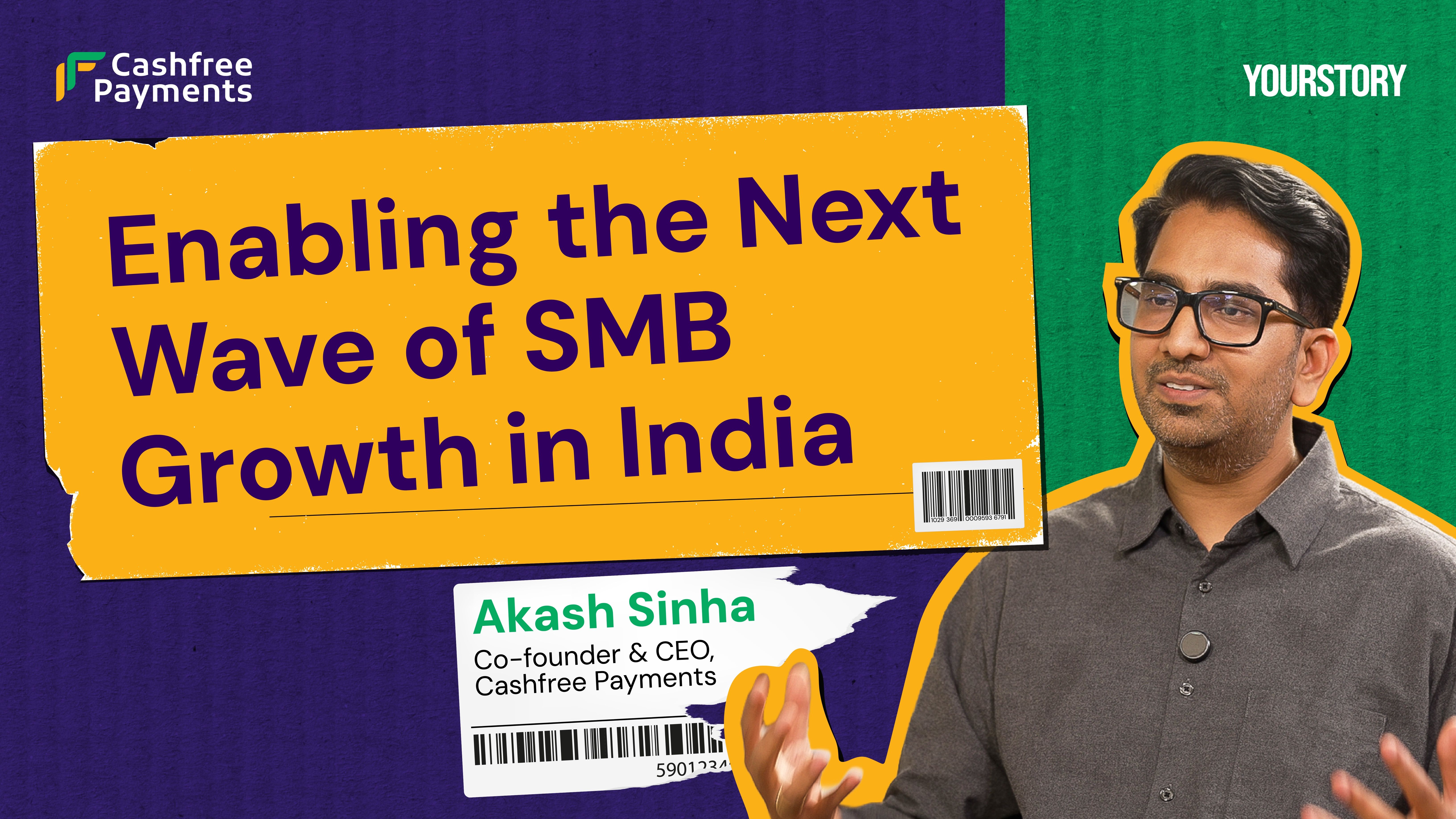
In a recent conversation with YourStory, Akash Sinha, Co-founder and CEO of Cashfree Payments, discussed how India's digital payments ecosystem has evolved over the past decade, why SMBs are emerging as a growth opportunity, and how payments infrastructure can help businesses move from their first transaction to larger-scale growth.
From digital payments to digital commerce
When Cashfree Payments began in 2015, online payments were still relatively new, and Sinha recalls that businesses approached them with considerable caution, creating an early need to make digital payments simpler and more accessible.
Since then, smartphone and internet adoption, along with wider acceptance of digital payments, have fuelled a much larger digital commerce market, with products such as instant refunds and settlements making transactions more convenient for consumers and businesses alike.
Sinha believes the next opportunity lies in the growing number of businesses joining this ecosystem. "SMBs are going to come, and online will become a primary medium for them to reach out to their customers," he said.
For these businesses, payments are more than a way to collect money: they can influence whether a customer completes a purchase, whether a new brand earns trust, and how quickly it builds traction.
Trust is critical for young businesses
Customers may recognize an established enterprise. But for a new business, every transaction is a trust-building exercise. Even a strong product and clear market opportunity may not stop first-time customers from hesitating to pay online.
"Having the right payments partner is very important because they establish trust between customers and the businesses," Sinha said.
Cashfree Payments has built features aimed at making transactions more comfortable, including merchant trust indicators. This can matter for young businesses, where limited capital can make it hard to sustain a business that isn't yet seeing traction.
The checkout can become a growth lever
As an SMB moves beyond accepting digital payments, the next challenge is converting interest into completed purchases. A customer who arrives through an Instagram ad, for instance, may abandon the purchase if checkout requires too much effort. Cashfree Payments' Checkout 360 aims to reduce that friction through features such as saved addresses and payment methods.
The opportunity also extends to affordability. EMI, BNPL, and targeted offers can make products more accessible to customers who don't want to pay upfront, helping SMBs turn intent into completed transactions and bring customers back. The objective is no longer just to process a transaction, but to reduce friction across the whole journey.
Lowering the barriers to getting started
For an entrepreneur still testing an idea, payment costs can become another consideration while margins and the business model are taking shape. Cashfree Payments' zero-MDR initiative addresses this by waiving payment gateway fees for all new businesses signing up on Cashfree until they reach Rs 20 lakh in sales, removing one more barrier to starting up.
The support extends beyond cost, with next-day settlements and a dedicated account manager helping newer businesses navigate refunds, settlements, and other aspects of digital payments as they scale, so they can focus on their product and customers.
AI could make commerce more responsive
For SMBs, AI could be valuable since smaller teams have fewer resources for repetitive operational tasks. Sinha describes a use case around abandoned payments: instead of a large support team calling to find out why a customer dropped off, an AI agent could engage the customer, identify the issue, and offer a relevant payment option, shifting AI from improving efficiency to recovering lost revenue.
Agentic commerce could bring another change, as consumers delegate shopping tasks to AI agents. Businesses will need payment infrastructure built for these new journeys, supporting both consumers using agents and businesses automating their operations.
Helping Indian businesses think beyond borders
For the next generation of SMBs, growth may also mean reaching customers outside India. Sinha sees cross-border payments as a significant opportunity, particularly for ecommerce and travel, as well as Indian companies looking to sell globally. Cashfree Payments supports both international businesses selling into India and Indian merchants selling overseas, aiming to reduce the friction of going global, from setting up overseas entities to managing currencies.
"We should think global," Sinha said, capturing the broader shift taking place across India's SMB ecosystem.
The opportunity is no longer simply to help more businesses accept digital payments. It is to give them the infrastructure to build trust, convert customers, automate operations, and reach markets far beyond their immediate geography.
As more entrepreneurs build digital-first businesses, the role of payments could increasingly be defined not by the transaction itself, but by what it enables a business to do next.""
View the full episode here :
Source: YourStory