Peptide drugs are popular, but FDA scientists warn they’re untested, may be harmful.
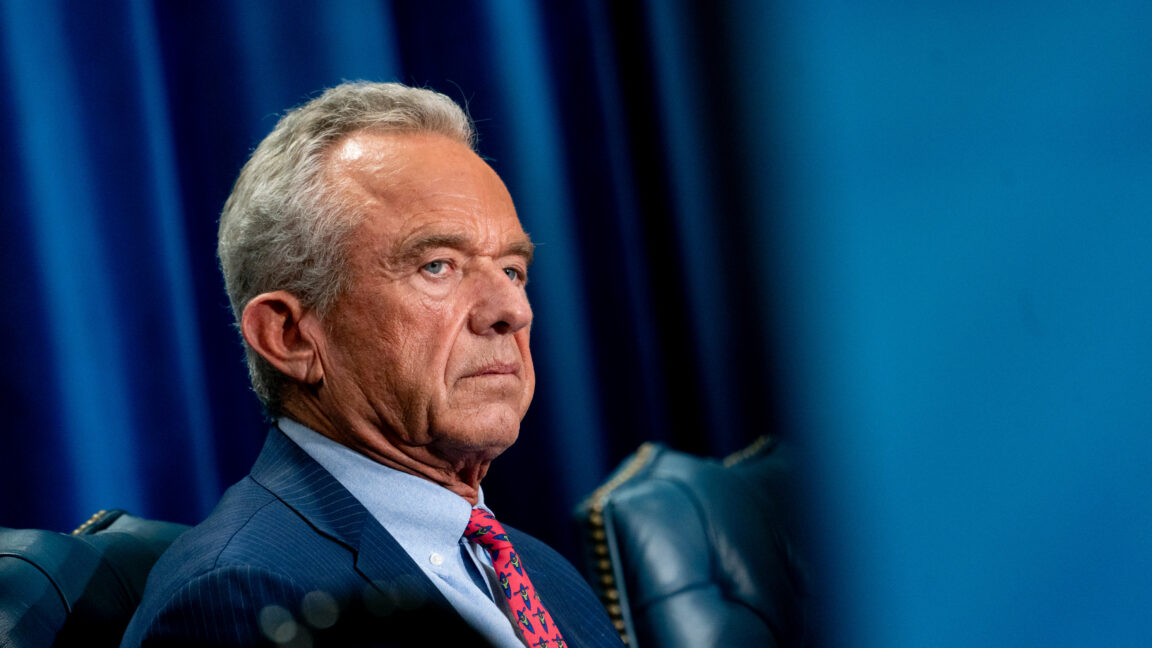
Anti-vaccine Health Secretary Robert F. Kennedy Jr. has stacked another federal advisory panel with allies, advancing his efforts to force the Food and Drug Administration to reverse its stance on a dozen popular but unproven injectable peptide drugs.
While FDA scientists determined in 2023 that the drugs lack evidence of benefits and may pose safety risks, Kennedy is a self-professed “big fan” of the dubious drugs and has vowed to “end” FDA’s “aggressive suppression” of them.
On Monday, the Food and Drug Administration updated its list of advisors who will review the peptides, adding nine new members—almost all of whom personally promote peptide use and/or have financial ties to wellness clinics that offer peptide treatments. The additions bring the total number of advisors to 13, making it easy for the new members to determine the outcome of upcoming meetings.
At the same time, the FDA released briefing documents for the upcoming meetings with the advisors, in which FDA scientists reaffirm that there is not enough evidence of safety and efficacy to justify making the peptides more accessible.
The advisory panel will meet July 23 and 24 and discuss seven peptides. On the first day, advisors will discuss the use of peptides BPC-157 for ulcerative colitis, KPV for wound healing and inflammation, TB-500 for wound healing, and MOs-C for obesity and osteoporosis.
On the second day, advisors will discuss the use of peptides emideltide for opioid withdrawal, chronic insomnia, and narcolepsy; semax for cerebral ischemia, migraine, and trigeminal neuralgia (a condition causing severe facial pain); and epitalon for insomnia.
There will also be a meeting scheduled before the end of February 2027, in which advisors will discuss five additional peptides.
Specifically, the meetings will discuss whether these unproven peptides can be produced by compounding pharmacies, which make specialty drugs. Currently, the FDA does not allow compounding pharmacies to make the peptides in question for human use, though the drugs can be sold for research use. The panel that Kennedy has now stocked with peptide advocates is the Pharmacy Compounding Advisory Committee.
While the FDA is not obligated to accept the recommendations from its advisory committees, it often does. In an introductory briefing document for the meeting next month, the agency said it “does not intend to issue a final determination on the issues at hand until input from the advisory committee process has been considered and all reviews have been finalized. The final determination may be affected by issues not discussed at the advisory committee meeting.”
The nine new members are:
Gabriel Alizaidy, who promotes peptides on social media and in a newsletter he runs. He is a scientific director at Maximus, a “personal performance medicine” clinic offering peptide injections. The FDA recently sent Maximus a warning letter over “false or misleading” claims on peptides used for weight loss, The Washington Post reported.
Asare B. Christian, a sports medicine doctor who founded Aether Medicine in Pennsylvania, which uses peptides in its treatments for pain, anti-aging, injuries, and neurological disease.
Robert Harshbarger, a Republican state senator in Tennessee who is a pharmacist and son of US Rep. Diana Harshbarger (R). In November, Diana Harshbarger specifically asked Kennedy to have the FDA reevaluate six peptides.
Melissa Loseke, the founder and medical director of the Re-New Institute in Nebraska, which offers peptide treatments in its focus on “whole-person healing” and its mission to “extend lifespan.”
Haleem Mohammed is the chief medical officer at Gameday Men’s Health, which offers peptide therapy as part of its focus on “hormone optimization, vitality and longevity care.”
Gerald Morris, medical director at the wellness clinic AMG Medical in Tucson, Arizona. His website says he has “a passion for regenerative medicine, peptide therapy, and human longevity.
Josh Starbuck, a concierge doctor in Hawaii who focuses on functional medicine and peptide therapy for anti-aging and longevity.
Kris Wusterhausen, founder of The Resurge Clinic, a wellness and longevity clinic in Texas, which promotes peptides.
Last is David Pope, a chief pharmacy officer at XiFin Pharmacy Solution, a company that makes healthcare workflow and billing software. It’s unclear if he has a public stance on peptide use.
The four previous members are:
Timothy Fensky, a pharmacy industry consultant and representative from the National Association of Boards of Pharmacy.
Elizabeth Rebello, an anesthesiologist and executive director at the University of Texas MD Anderson Cancer Center.
Brian Serumaga, director of personalized medicines at US Pharmacopeia.
Donnette Staas, vice president of regulatory strategy at Jazz Pharmaceuticals, who is a non-voting industry representative.
Source: Ars Technica