Outbreak of fighting between Hezbollah and Israel has forced mediators to cancel US-Iran talks in Switzerland
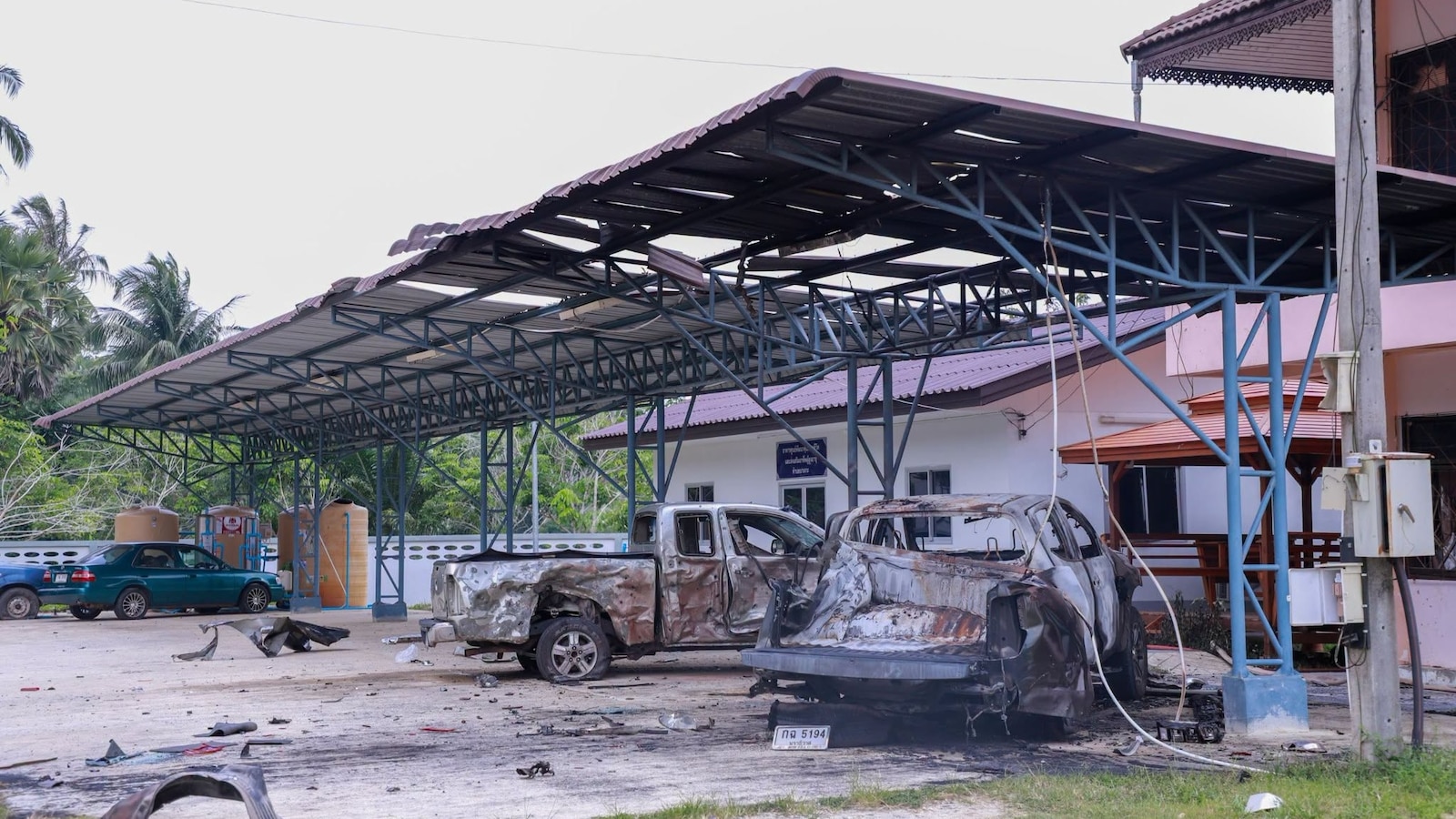
Israeli strikes on southern Lebanon have killed at least 16 people, local authorities said on Saturday, despite reports of a renewed ceasefire aiming to end persistent violence that threatens the new agreement between the US and Iran.
Lebanon’s civil defence agency said its personnel transported “16 dead and 12 wounded” to hospital, adding that they had been working “since the early morning hours” in the Nabatieh district in response to “ongoing attacks targeting the area”.
A new outbreak of fighting between Hezbollah and Israel on Friday forced mediators to cancel talks in Switzerland that were supposed to start the process of turning the current interim agreement between the US and Iran signed this week into a more detailed deal that would cover Iran’s nuclear programme.
The interim agreement calls for a cessation of hostilities on all fronts, including Lebanon. It has been fiercely criticised by Israeli ministers, officials and commentators, who argue that it stops Israel countering threats posed by Hezbollah.
The Israeli military said it was striking Hezbollah targets in response to overnight projectile launches from the Iran-aligned Lebanese militant organisation.
One of the deadliest Israeli strikes on Saturday hit a three-storey residential building in the southern town of Barish in the Tyre district, killing a father, mother and their two children, a local village official told Reuters.
Violence flared on Friday after four Israeli soldiers including a senior officer were killed when a tank was hit by Hezbollah, which said the strike had come after Israel broke a previous ceasefire agreement by advancing.
The Israeli attacks that followed killed 47 people, local authorities said, across southern Lebanon and the Bekaa valley.
The exact status of the new ceasefire reported to have come into effect locally on Friday evening is unclear. In public statements, Hezbollah has said it will abide by a ceasefire if Israel does, but has not said a ceasefire is actually in place.
Hassan Fadlallah, a Hezbollah parliamentarian in Lebanon, said his group had the right to respond to Israeli attacks.
“There is talk of a ceasefire. For us, what concerns us is that the enemy fully … doesn’t attempt to attack our country and villages or seek to occupy any new position,” he said in a statement.
The most recent round of war between Hezbollah and Israel began days after the US and Israel launched strikes on Iran on 28 February, with Hezbollah firing rockets and drones at civilian communities in northern Israel, and Israel seizing and occupying large swathes of southern Lebanon to establish a “buffer zone”.
The continuing violence and diplomatic back-and-forth over the planned talks between Iran and the US have fuelled scepticism that a definitive end can be found to a regional war that has killed at least 7,000 people, sent energy prices soaring and threatened global economic chaos.
The interim US-Iran agreement signed this week has already reopened the strait of Hormuz, which before the war carried about a fifth of the world’s supplies of oil and liquid gas but was closed to most shipping by Tehran shortly after the beginning of the conflict.
Neither Israel nor Hezbollah are signatories to the deal, which calls for a halt to military operations in Lebanon and for the country’s sovereignty to be respected.
Benjamin Netanyahu, Israel’s prime minister, has vowed to keep Israeli forces in southern Lebanon until any threat to Israel is eliminated. Hezbollah has refused to halt its attacks unless Israel commits to withdrawing from Lebanon, which Iran says is also a condition of the deal.
Iran’s foreign ministry spokesperson, Esmail Baghaei, said on Saturday that consultations through mediators regarding the next phase of negotiations to draft a final US-Iran agreement were continuing, adding that, because the initial deal was signed digitally earlier this week, the talks in Switzerland were not urgent. Plans were under way to hold a meeting in the coming days, Baghaei said.
The interim deal gives negotiators 60 days to come up with a nuclear agreement, but that can be extended. Many observers warn that it will be very hard to reach an agreement on such a complex issue within two months. The 2015 nuclear deal, which the US president, Donald Trump, scrapped during his first term, took more than 18 months to negotiate.
The deal outlines lucrative incentives for Iran, including the eventual lifting of all international sanctions and a $300bn (£225bn) fund for postwar reconstruction.
Tehran has already won some economic concessions, which may bring some relief to Iran’s acute economic crisis. After the signing of the interim deal, the US lifted its blockade of Iran’s ports and is allowing it to sell its oil freely.
Source: Guardian - World News