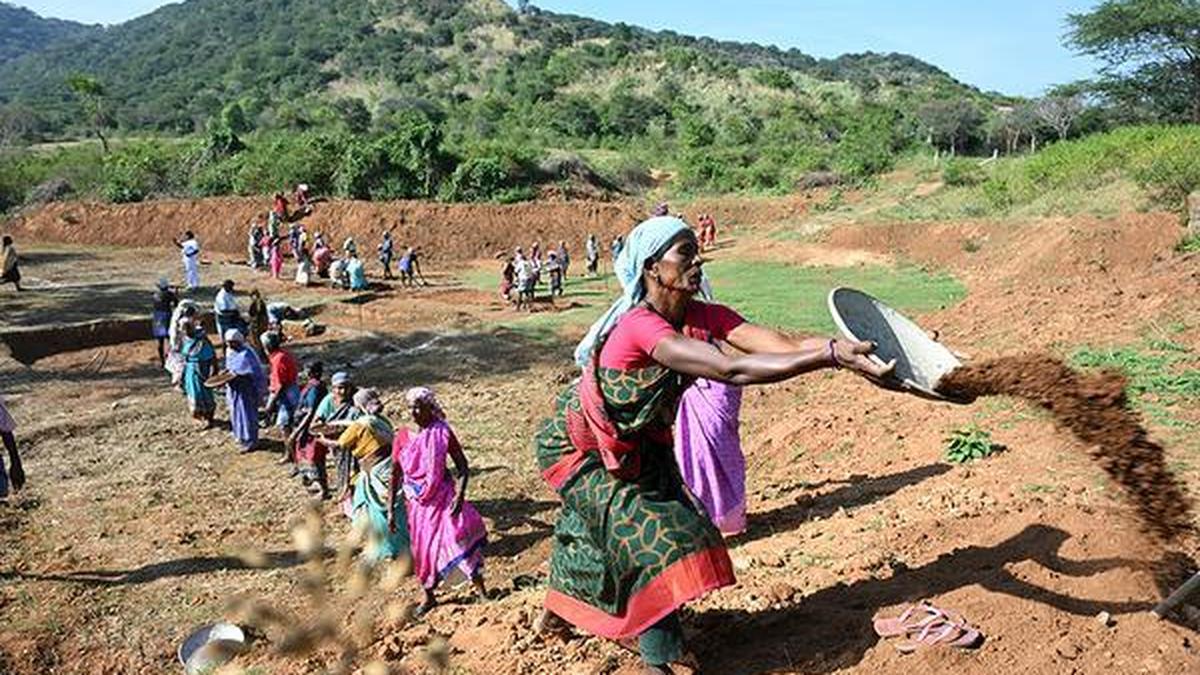
Larger, poorer States are set to get higher funding under the Centre’s new rural jobs scheme, with draft rules for the Viksit Bharat–Guarantee for Rozgar and Ajeevika Mission (VB-G RAM G) proposing to use the 16th Finance Commission’s horizontal devolution formula to determine Central allocations under the scheme. From next year, an unknown percentage of funding will also be allocated on the basis of how well States have implemented the scheme.
These are among the proposals laid out in a gamut of draft rules notified over the last two days for the VB-G RAM G law, which is set to come into effect from July 1, replacing the 20-year-old Mahatma Gandhi National Rural Employment Guarantee Act. Apart from the allocation formula, the rules address provisions for grievance redressal mechanisms, institutional and administrative frameworks, and transitional provisions to govern the switchover from the UPA-era MGNREGA Act.
Also read | Change for the worse: On MGNREGA to VB-G RAM G
Objections and suggestions to the draft rules, from stakeholders, experts, and the general public, is open till June 21.
One of the key features of the VB-G RAM G legislation passed by Parliament last December was that it shifts away from MGNREGA’s demand-based approach, which was meant to stretch the scheme’s budget to match any level of demand on the ground. Further, while the Centre footed 100% of the wage bill under the MGNREGA, the VB-G RAM G has divided this expenditure between the Centre and States at a 60:40 ratio for most States.
In the draft rules spelling out the “objective parameters” for normative allocation to States under the new law, the Centre said that each fiscal year’s allocation would be based on the “objective parameters used for horizontal devolution among States as recommended by the Sixteenth Finance Commission”.
This devolution formula is based on metrics with different weightages, including the 2011 Census population, demographic performance, forests, area, per capita Gross State Domestic Product Distance, and contribution to Gross Domestic Product. The maximum weightage is given to the GSDP Distance (42.5%), which measures how far a State’s per capita GSDP falls short of the wealthiest States, effectively prioritising poorer States. The next highest weightage is given to population (17.5%), benefiting larger States, while all of the other metrics carry a 10% weightage each in this formula.
However, the draft rules added that a part of the normative allocation from the second year of the Act’s implementation will be based on “performance criteria”.
This includes the “timely payment of wages”, “compliance with social audit requirements”, “percentage of completion of works”, and “any other performance-related indicators” that the Centre chooses to notify.
The draft rules do not mention how much of the normative allocation will be based on these performance indicators.
The draft rules provide for continuing ongoing works under MGNREGA, settling pending liabilities, transferring records, and continuing worker rights during the transition period.
It also notes that existing e-KYC-verified MGNREGA job cards will remain temporarily valid until new Gramin Rozgar Guarantee Cards are issued, while fresh works may also be opened if ongoing projects are insufficient to meet labour demand.
The draft rules also propose the terms to constitute the National Level Steering Committee, which will “recommend decisions relating to normative allocations to States”, among other functions related to setting standards, guidelines, and monitoring mechanisms. This 16-member Committee, to be headed by the Union Rural Department Secretary, will also include at least five representatives from State governments nominated by the Centre. Representatives from other Union Ministries and NITI Aayog will also be part of this committee.
The draft rules discuss provisions related to the Central Gramin Rozgar Guarantee Council, which is to be headed by the Union Minister for Rural Development, and provide for procedures related to administrative expenses, grievance redressal, payment of wages and unemployment allowance, and expenditure incurred beyond normative allocations, including for Union Territories without legislatures.
While the National Level Steering Committee is supposed to give strategic guidance on implementation, the Central GRG Council is meant to advise the Centre on overall implementation of the new law, with the Ministry saying the two bodies are intended to strengthen policy coordination, institutional oversight, and participatory governance.
The draft rules, notified through eight different gazette notifications, have been placed in the public domain to facilitate wider consultation with States, institutions, experts, worker groups, civil society organisations and the public over the next month.
Published - May 23, 2026 02:29 pm IST
Source: The Hindu - India News