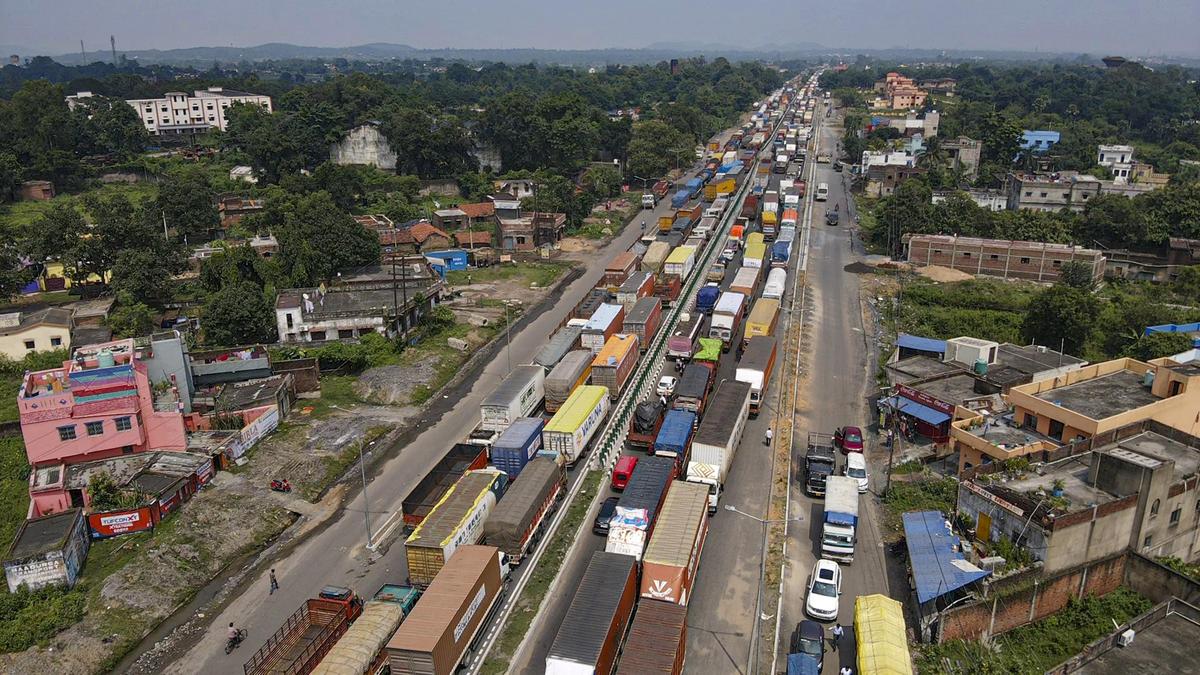
A small part of India’s map, referred to as the ‘Chicken Neck’ or Siliguri Corridor, is deemed the Nation’s strategic lifeline. Recently, the West Bengal government handed over the management of seven crucial highways in this area directly to the central government. These sections were previously managed under the National Highways Wing of the State’s Public Works Department (PWD).
The newly-elected West Bengal government attributed this decision to India’s integrity and national security, and to ensure seamless connectivity with the northeastern States.
The strategic Siliguri corridor is called the 'Chicken's Neck' for its shape. It is a strip of land located in northern West Bengal's Siliguri area, having a width of more than 20 km. The strip is sandwiched between Nepal and Bangladesh, with Bhutan and China a few hundred kilometres away. Despite its small size, it is considered one of India’s most sensitive regions.
Geographically, this corridor serves as the backbone of India, acting as the sole land connection between the eight northeastern States — Assam, Arunachal Pradesh, Manipur, Meghalaya, Mizoram, Nagaland, Sikkim, and Tripura — and the rest of the country.
The primary railway lines and national highways that traverse this corridor are the only access points to these States. In the event of a crisis on this narrow route, these eight northeastern States could be entirely isolated from the mainland.
The BJP-led West Bengal government said transferring control could speed up long-delayed upgrades, reinforcements, and repairs of highways essential for defence logistics, trade, tourism, and improving regional connectivity. The Indian Army stands to gain significantly from the central government’s direct oversight of these critical strategic routes. This area is home to many key military units.
Ensuring these roads are always in optimal condition is vital for the swift deployment of equipment, heavy weaponry, and troops to the northeastern borders. Centralised control will enhance strategic readiness and allow the army to respond quickly in emergencies without obstacles, according to the Defence Ministry.
Published - May 19, 2026 01:27 pm IST
Source: The Hindu - India News