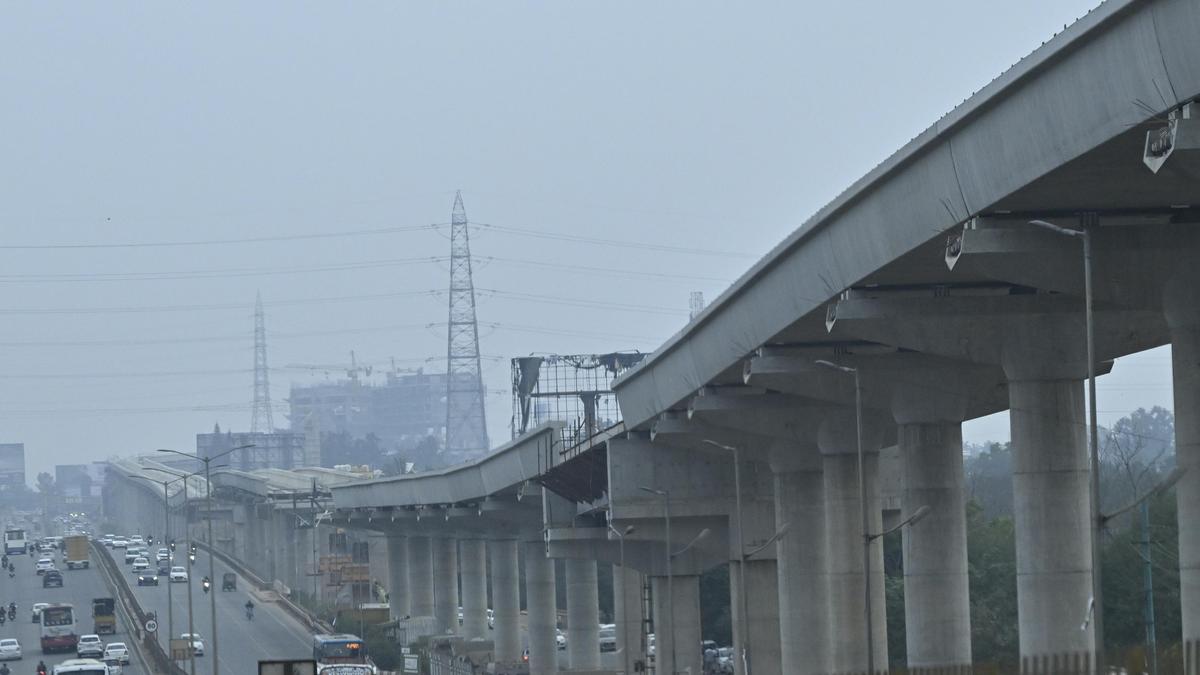
A study by the Indian Institute of Science (IISc) has found that Bengaluru’s upcoming Namma Metro Blue Line can potentially operate entirely on solar energy on a net annual basis, using only land and infrastructure already owned by the Bangalore Metro Rail Corporation Limited (BMRCL).
The study, titled ‘Assessing the Potential of Directly Using Solar Power to Run the Operations of Blue Line of Namma Metro’, was conducted by the IISc Sustainable Transportation Lab in collaboration with BMRCL and supported by HSBC under its Corporate Social Responsibility (CSR) programme. According to the report, the nearly 55-km Blue Line corridor connecting Central Silk Board and Kempegowda International Airport under Metro Phases 2A and 2B can achieve full annual energy self-sufficiency through large-scale solar photovoltaic (PV) integration.
The researchers said that the project represents the first corridor-scale techno-economic analysis in India examining direct integration of solar power into a metro rail traction system. The report has already been submitted to BMRCL for consideration.
The study was led by Prof. Ashish Verma of IISc’s Department of Civil Engineering, along with a team of researchers from multiple departments. Conducted between August 2025 and March 2026, the research included modelling of the Blue Line’s traction power requirements, solar resource mapping across BMRCL properties, and analysis of train operations under different scenarios.
According to the findings, an installed solar capacity of 83.3 MWp would be sufficient to meet the corridor’s annual energy demand of 152 GWh under full-scale operations involving 21 trains running at two-minute intervals. Researchers estimated that BMRCL-owned properties, including station rooftops, elevated viaduct parapets, station canopies and depot rooftops, can accommodate between 79 MWp and 89 MWp of solar installations.
The report noted that BMRCL could immediately install up to 30 MWp of rooftop solar capacity without making any modifications to the existing traction infrastructure. This alone could offset around 36.5% of the corridor’s annual electricity consumption.
Researchers highlighted station rooftops as the most commercially attractive starting point. All 30 elevated stations together offer around 109,600 square metres of usable rooftop space, capable of supporting nearly 50,000 solar panels with a combined capacity of 29.75 MWp. The estimated investment for this first phase ranges between ₹48 crore and ₹63 crore, but the study projects annual electricity savings of ₹36.4 crore from the first year itself, with a payback period of less than two years.
The second phase proposes extending solar infrastructure to viaduct parapets and station side canopies, increasing the total installed capacity to about 54 MWp. This phase is expected to generate annual savings exceeding ₹61 crore, while cumulative savings over the project’s lifetime could cross ₹2,600 crore.
The study also underlined the role of regenerative braking, which can recover around 29% of traction energy. When combined with rooftop solar generation, nearly 61% of the Blue Line’s total traction energy demand could be offset.
Apart from financial savings, the report emphasised significant environmental benefits. Phase 1 alone could prevent the emission of more than 44,500 tonnes of carbon dioxide annually, equivalent to removing nearly 19,000 petrol cars from Bengaluru’s roads. Under the expanded Phase 2 scenario, annual carbon savings could rise to nearly 77,900 tonnes.
Prof. Ashish Verma said the study demonstrates that metro rail systems can evolve into net-zero energy transport systems using their own physical infrastructure. He described the Blue Line project as “ready-to-tender infrastructure investment” with long-term economic and environmental returns, and urged BMRCL and the Karnataka government to move towards pilot implementation without delay.
The report has recommended that BMRCL immediately tender rooftop solar installations across all 30 stations, undertake structural surveys of depots and viaducts, and begin regulatory engagement with BESCOM and the Karnataka Electricity Regulatory Commission for net metering approvals.
Published - May 18, 2026 08:37 pm IST
Source: The Hindu - India News