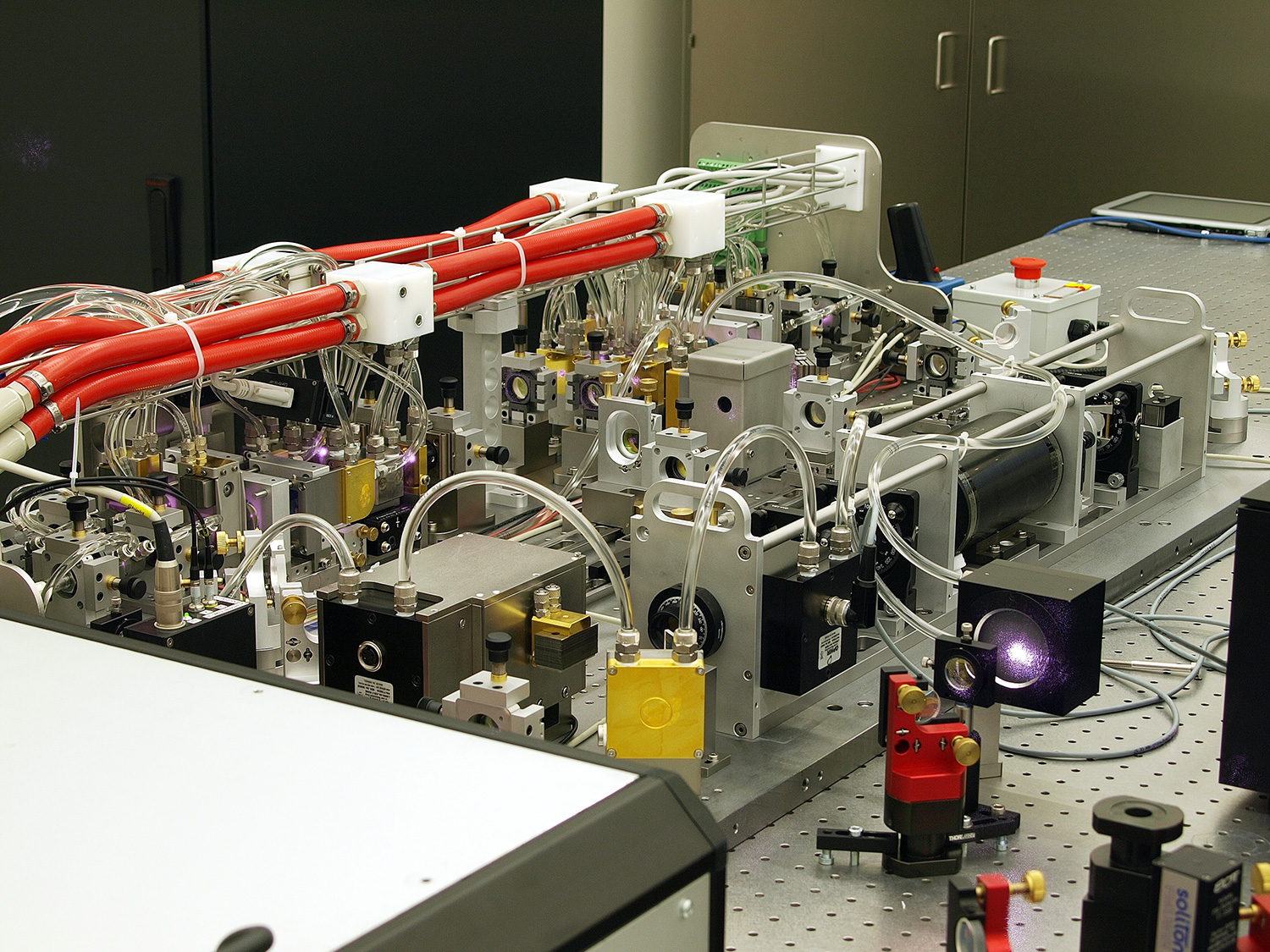
Over a decade ago, when I was first starting to pretend I could write about quantum mechanics, I covered a truly bizarre experiment. One half of a pair of entangled photons was sent through a device it could navigate as either a particle or a wave. After it was clear of the device, the other half of the pair was measured in a way that forced the first to act as one or the other. Once that was done, the first invariably behaved as if it were whatever the measurement made it into the whole time.
It was as if the measurement had reached backward in time to alter the photon's behavior, raising questions about whether causality itself actually applied to quantum mechanics.
Unbeknownst to me, physicists have been asking the same question and have designed experiments to probe it in detail. A few weeks back, they provided an experiment that seems to indicate it's possible to create quantum superpositions of two different series of events, essentially making the question of whether A or B happened first a matter of probability*. While the current experiment leaves a few loopholes, the researchers behind the work think they could ultimately be eliminated.
Read full article
Comments
Source: Ars Technica