The Supreme Court on Monday offered sharp ideological differences in considering a Mississippi election law that allows for the counting of mail-in ballots received after Election Day — a high-stakes court fight that could have significant implications for the November midterm elections, and determining control of the new Congress.
Justices heard roughly two hours of oral arguments in the case, Watson v. Republican National Committee, centered on a 2024 lawsuit brought against Mississippi's state law that allows for the counting of mail-in ballots received up to five days after the election, so long as they are postmarked by or before Election Day.
Mississippi is one of 14 states — as well as the District of Columbia and three U.S. territories — that currently allow for the counting of late-arriving mail-in ballots, so long as the ballots are postmarked by or before Election Day.
SCOTUS TO REVIEW TRUMP EXECUTIVE ORDER ON BIRTHRIGHT CITIZENSHIP
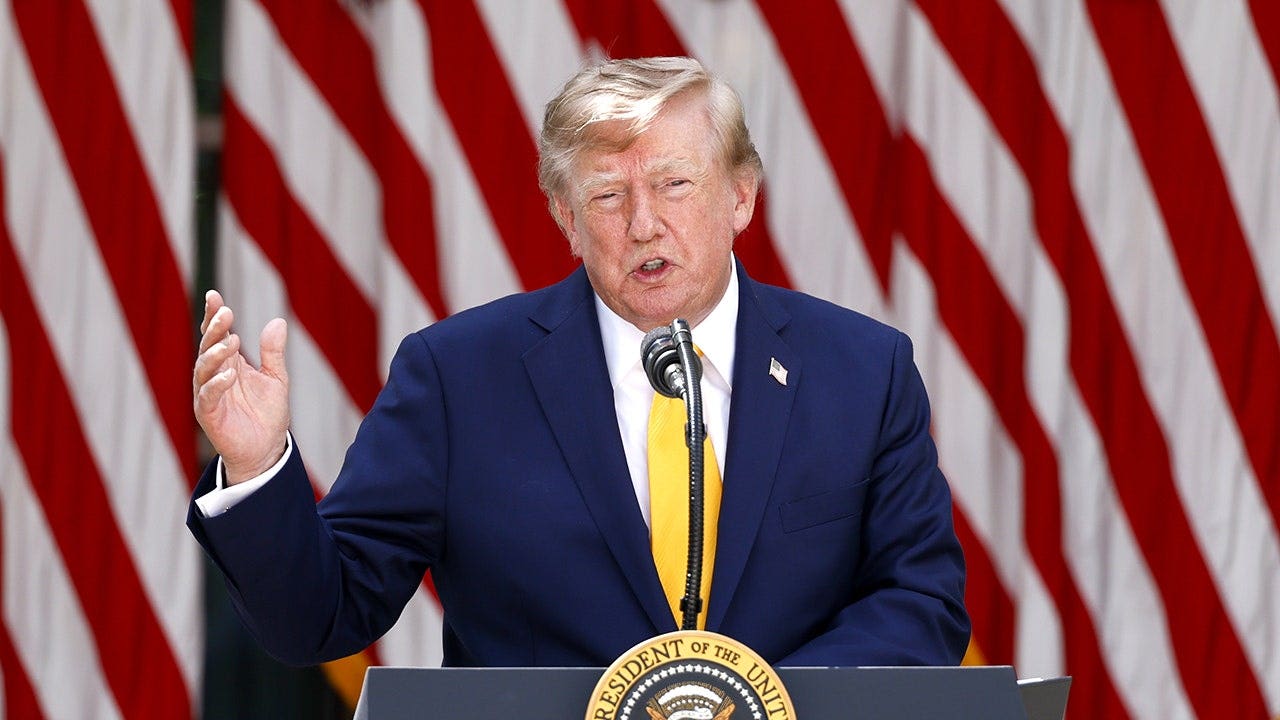
The high court's review of the case comes as President Donald Trump has focused on mail-in voting during his second White House term, and has argued that such laws undermine voter confidence.
During oral arguments, justices grappled with whether federal election-day statutes preempt various state laws, and sought to clarify what "the election" means when it comes to the actual casting and receiving of ballots.
Justices on the high court appeared largely sympathetic to the arguments made by the Trump administration's lawyer, U.S. Solicitor General D. John Sauer, who noted that the Mississippi law and other late-arriving mail-in ballot laws in other states could erode voter confidence in election results.
Chief Justice John Roberts and Justice Amy Coney Barrett could be the deciding votes on the matter, and used their time to ask tough questions to lawyers for both sides.
"If Election Day is the voting and taking, then it has to be that day," Roberts noted. He also questioned whether the interpretation of "Election Day" could impact early voting, asking lawyers whether their logic "requires a different consideration" for early ballots.
"Is there any limit to that? Fill out a ballot… and drop it off two weeks before?"
SUPREME COURT SIGNALS IT MAY LIMIT KEY VOTING RIGHTS ACT RULE
Justice Samuel Alito pointed to concerns that "confidence in election outcomes can be seriously undermined" when results are delayed, which was echoed later by Justice Brett Kavanaugh.
"If the apparent winner the morning after the election ends up losing due to late arriving ballots, charges of a rigged election could explode," Kavanaugh noted.
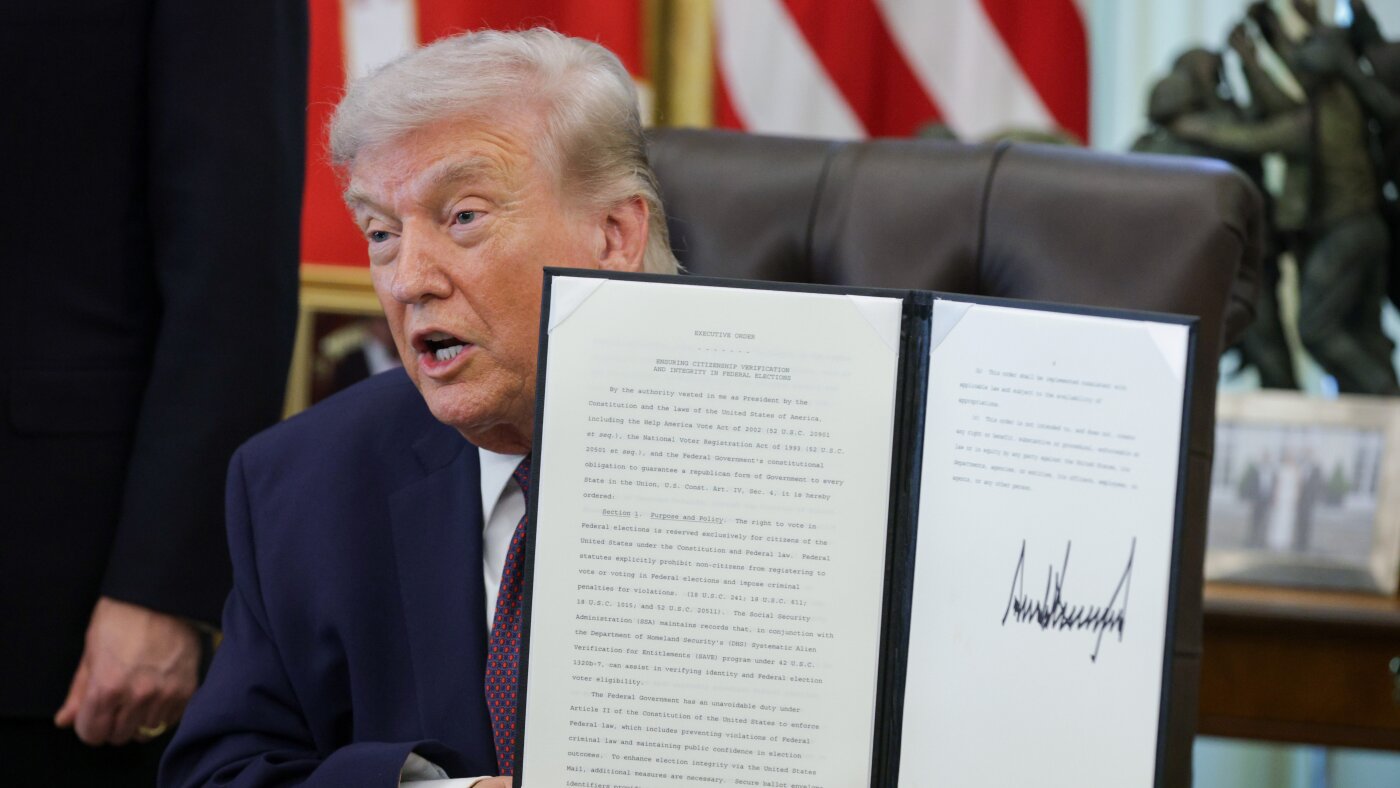
The case comes as Trump has targeted mail-in voting efforts in his second presidential term. He previously signed an executive order seeking to end mail-in ballots in federal elections, with which several GOP-led states have complied.
That action was separate from the current Supreme Court appeal, however, which centered on the Republican National Committee's lawsuit brought against Mississippi over its mail-in voting statutes, enacted after the COVID-19 pandemic. The law allows mail-in voting ballots to be received up to five days after the election.
Mississippi officials sought to defend their law against questions from conservative justices regarding a "slippery slope," and other hypothetical questions raised by conservative justices, including questions centered on early voting, and votes sent by U.S. service members stationed overseas.
"If history teaches anything," Justice Neil Gorsuch noted, "[it is that] as soon as anything is allowed, it will happen."
Gorsuch pressed lawyers on various hypothetical questions, including how far states could go in pushing their own deadlines for accepting mail-in ballots, should the Supreme Court side with Mississippi in the case.
"If we were to rule against you, is there anything that would limit a state from allowing a receipt by election officials up until the day of the next Congress?" Gorsuch asked at one point during arguments.
Paul Clement, who presented arguments for the Republican Party and Libertarian voters, suggested that a high court ruling for Mississippi would open the door to "limitless" options.
"Maybe the next state can figure out a way to have an election without anybody even receiving anything, I don’t know," Clement said. "That seems to me to be a large reason why Election Day should mean ‘Election Day.’"
Alito, for his part, seemed to back the view that "Election Day" should be interpreted to mean a single day, rather than the broader or more open-ended period advanced by some states that allows for the late counting of certain ballots.
"We have lots of phrases that involve two words, the second of which is ‘day,’" Alito interjected, before listing "Labor Day, Memorial Day, George Washington’s birthday," and Independence Day, he said, adding that "they are all particular 'days.'"
"So if we start with that, if I have nothing more to look at than the phrase 'Election Day,'" he said. "I think this is the day in which everything is going to take place, or almost everything."
FEDERAL JUDGES IN NEW YORK AND TEXAS BLOCK TRUMP DEPORTATIONS AFTER SCOTUS RULING
The high court's consideration of the case comes amid a long-standing legal tug-of-war over how much control states should have over their voting regulations, including in elections involving both federal and local candidates.
It comes as justices are weighing other high-stakes election cases this year, including the use of race to draw congressional voting districts, and a federal law restricting the amount of money that political parties can spend in coordination with candidates for Congress and president.
Lawyers for Mississippi told the court that an "'election' is the conclusive choice of an officer... So the federal Election-Day statutes require only that the voters cast their ballots by Election Day."
"The election has then occurred, even if election officials do not receive all ballots by that day."
Republican Party officials told Fox News Digital that they see the case as a way to better protect election security and voter confidence.
"Watson v. RNC is about a simple principle: ballots must be received by Election Day," Ally Triolo, the communications director for the RNC's Election Integrity efforts, said Monday. "This prevents elections from dragging on for days and weeks after voters have cast their ballots, causing confusion and undermining our elections."
The high court is expected to rule on the states' counting of mail-in ballots by June.
Source: Fox News - Politics