HomeTechnologyHave physicists finally discovered glueballs? New evidence points to yes.

Have physicists finally discovered glueballs? New evidence points to yes.

TechnologyAugust 13, 2026
2 min read
Have physicists finally discovered glueballs? New evidence points to yes.
“It’s the strongest evidence yet that particles dominated by a glueball component can exist in nature.”
Reading Settings

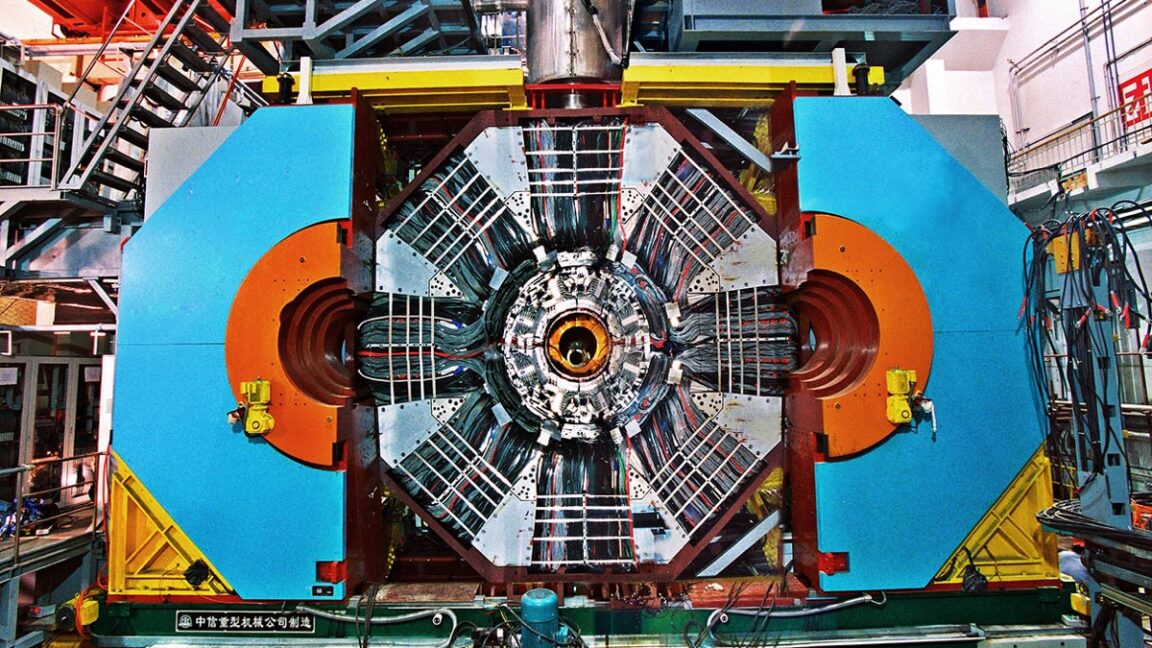
Physicists with the Beijing Spectrometer III (BES III) experiment have uncovered convincing new evidence of the existence of so-called glueballs, an elusive composite particle made entirely of gluons predicted by quantum theory. The results appeared in a preprint posted to arXiv last month and were also presented last week at the International Conference on High Energy Physics (ICHEP).

All the stuff we see around us is made up of quarks held together by gluons (carriers of the nuclear strong force) to form protons and neutrons, which comprise the core of every single atom. The Higgs boson, discovered in 2012 after decades of searching, was widely touted as the final missing piece of the Standard Model of Particle Physics. But there are still plenty of unanswered questions, including whether or not glueballs really exist. They should, if the Standard Model is correct; they're a direct prediction of quantum chromodynamics, i.e., the theory of the strong nuclear force. There should even be several kinds of glueballs.

As Matthew Francis wrote for Ars in 2015:

Read full article

Comments

Source: Ars Technica

Share this article

Related Articles

Priceline Promo Codes & Coupons: 10% Off August 2026
Aug 135 hours ago

Priceline Promo Codes & Coupons: 10% Off August 2026

Unlock massive discounts on Priceline hotels, flights, and rental cars. Find verified Priceline coupon codes and deals for Express Deals, student discounts, and more.

67351d14cdecd8b41abb50e37 min read
Read More
There’s a Fatty Liver Epidemic. AI Could Help Get Ahead of It
Aug 135 hours ago

There’s a Fatty Liver Epidemic. AI Could Help Get Ahead of It

Over a billion people worldwide have livers with excess fat, which can lead to a host of medical problems. Researchers think AI tools can spot the condition—and help stop it—early enough to save lives

6a7a2a8913d9a5bbede86a457 min read
Read More