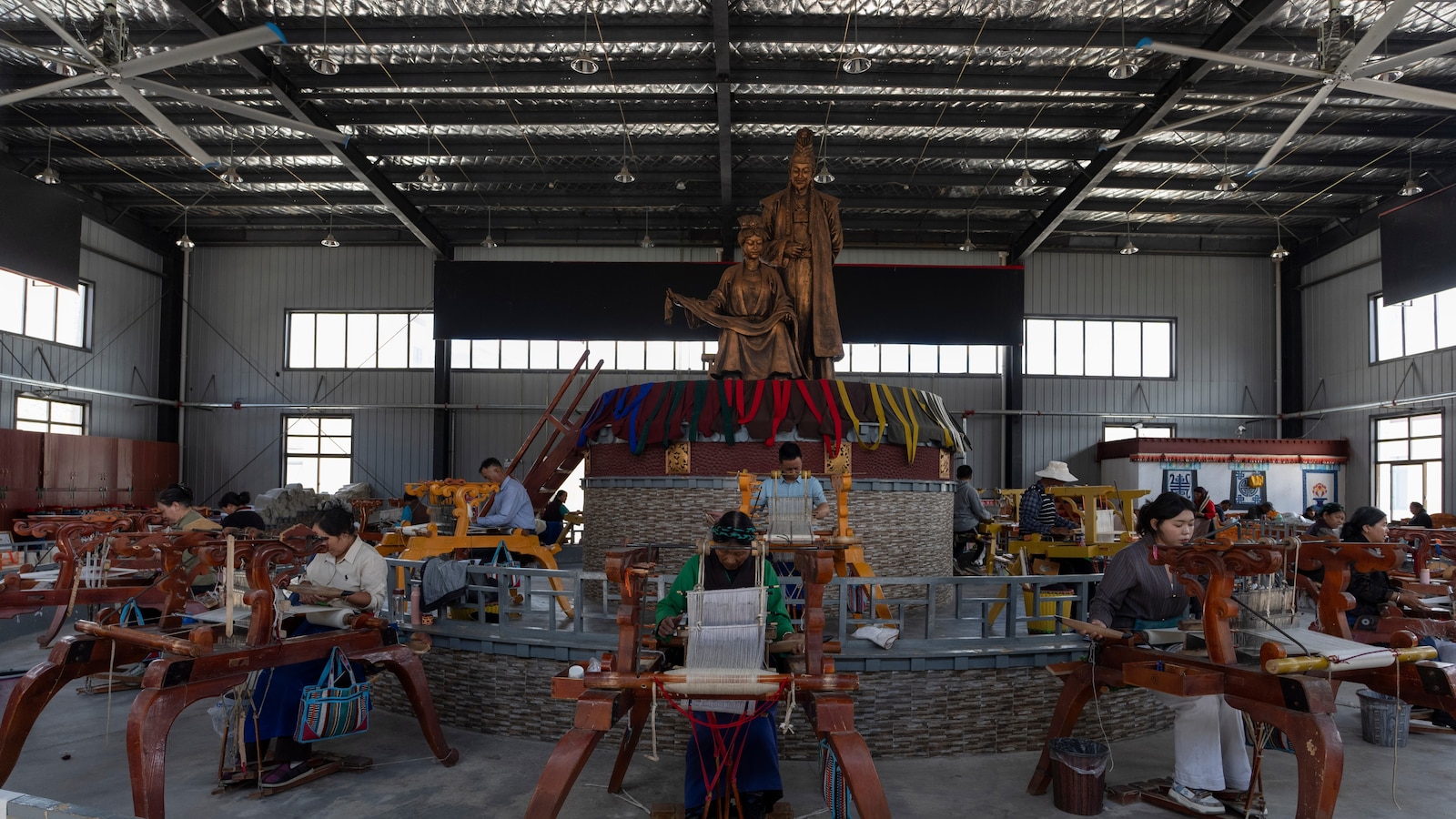
Artisans at a weaving cooperative in Tibet are working to preserve Pulu, a traditional wool fabric that has been used on the Tibetan plateau for centuries
SHANNAN, Tibet -- More than a dozen men and women sit at wooden looms, sliding shuttles through rows of wool yarn before pulling each thread tight. They repeat it again and again as they weave Pulu, the traditional woolen fabric that has clothed people on the Tibetan plateau for centuries.
They work at the Ethnic Huaji Handwoven Cooperative in Shannan, where artisans are trying to preserve one of Tibet’s oldest weaving traditions while creating jobs for local residents.
Founded in 2008 by Tibetan artisan Pasang, the cooperative employs more than 100 local residents, including some people with disabilities, while teaching younger Tibetans a craft that he feared was disappearing.
The cooperative specializes in Zeter, a finer variety of Pulu made from especially soft wool from the necks and backs of sheep. He said the finer wool makes the yarn more difficult to spin than that used for ordinary Pulu.
Pasang said that because Zeter is lighter, softer and more delicate than ordinary Pulu, it was presented as a tribute from Tibet to the Chinese imperial court during the Ming dynasty.
Pasang said he learned the craft from his parents at a time when fewer than 10 people still knew how to weave Zeter.
He added that the craft has been recognized as part of China’s national intangible cultural heritage, and that he hopes younger generations will continue practicing it.
The wool comes from sheep raised around Shannan, about 3,700 meters (12,100 feet) above sea level.
Statues of Tibet's 7th century King Songtsen Gampo and his Chinese bride, Princess Wencheng, stand at the center of the workshop, surrounded by wooden looms. According to local tradition, the weaving craft dates to when Princess Wencheng introduced weaving techniques to Tibet after marrying the king.
In Chinese official history, their marriage symbolizes the historical ties between Tibet and China. “It integrated Tibetan and Chinese cultures,” Pasang said about the fabric’s history.
The Associated Press joined a government-organized trip to Lhasa and Shannan last month, which included visits to the cooperative, palaces, Buddhist temples, tourist sites, an eldercare center and local businesses.
Next to the workshop, a small showroom displays scarves, shawls, jackets, bags and other products made from Pulu and Zeter. Pasang said most sales are in Tibet, although customers also come from elsewhere in China.
Tsering Yangchen has been working for seven years in the cooperative. The 80-year-old woman moved from another county and said she struggled to find work before joining the workshop, where instructors taught her and others how to weave.
She said Pulu is more than just a product she weaves.
“We usually wear them,” she added. “They are made from pure wool.”
Associated Press video producer Olivia Zhang contributed.
24/7 coverage of breaking news and live events
Source: ABC News - International