Illinois passed a similar law, giving services more incentive to make ads less booming.
On July 1, it will be illegal for streaming platforms to play ads louder than the content being watched in California.
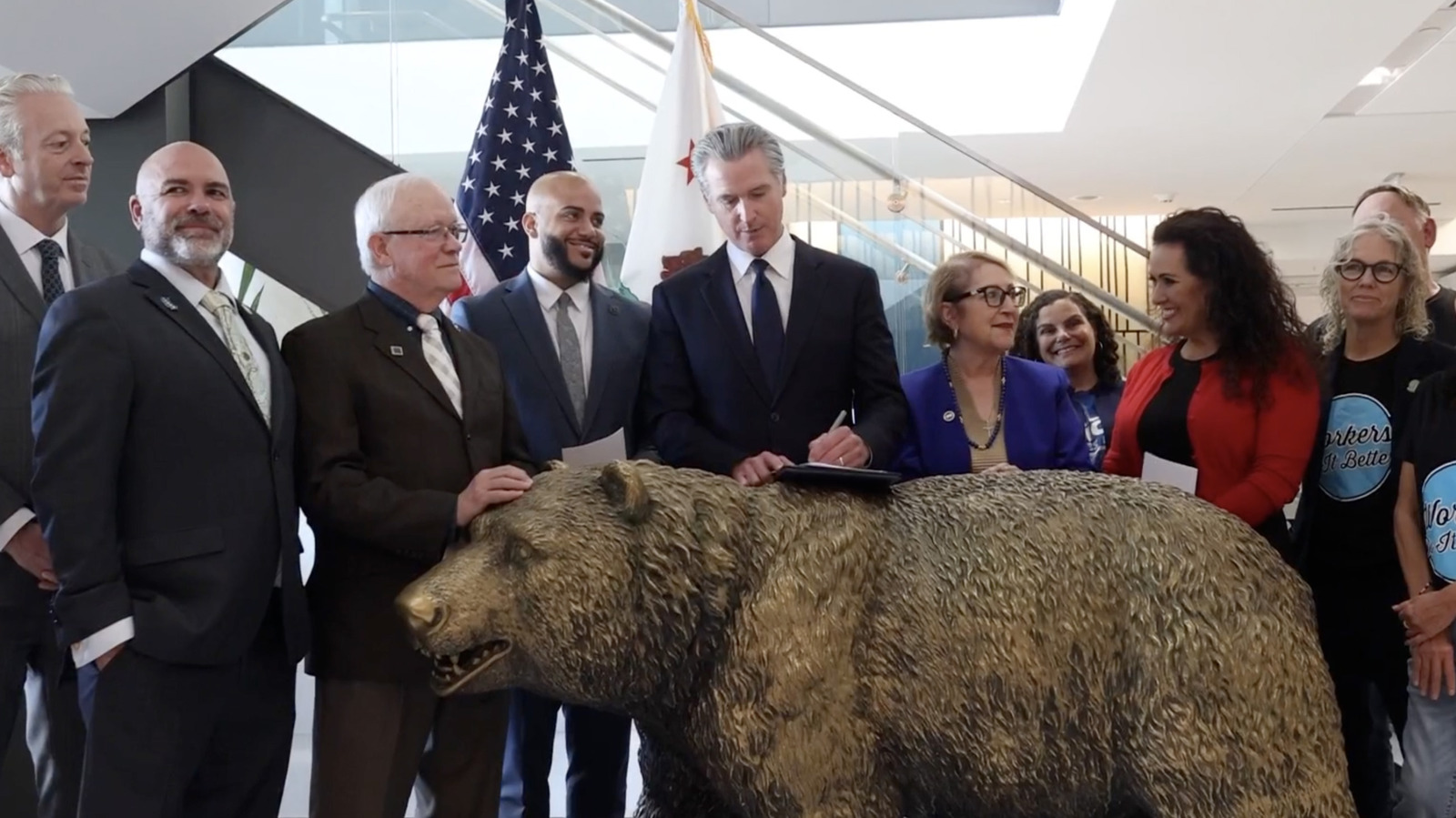
As The Hollywood Reporter highlighted this week, California Governor Gavin Newsom signed a bill (SB 576) in October 2025 that prohibits any video streaming service from transmitting the “audio of commercial advertisements louder than the video content the advertisements accompany” in the state.
The law brings some parity between streaming services and broadcast, cable, and satellite TV providers, which, under The Commercial Advertisement Loudness Mitigation (CALM) Act, can only play commercials at “the same average volume as the programs they accompany,” the FCC says.
We haven’t seen any streaming services explain how they will comply with the California law or if they will apply the volume adjustments to US streams outside of California. Although streaming providers could opt to only apply volume adjustments to customers that they detect as being in California, it’s reasonable to expect companies to apply these changes elsewhere. As it stands, streaming services will already have to apply the ad loudness requirements to streams in Illinois by July 1, 2027, per a bill passed this month.
The Motion Picture Association, which includes Netflix, Disney, Amazon Prime Video, and Paramount, and the Streaming Innovation Alliance, which includes Netflix, Disney, Peacock, and Pluto TV, opposed the bill. The groups argued that “many” streaming services were already trying to manage the “loudness of advertisements that come from server-side ad insertion that may be inconsistent with the loudness of the programs,” per a state Assembly analysis (PDF) from September 2025. Server-side ads can have differing volumes due to companies using various encoding pipelines.
Additionally, as the opposing groups previously pointed out, streaming services must contend with a broad range of output devices, including TVs, tablets, and phones.
Reporting on how streaming services might follow the California law, trade publication TV Tech in December reported: “Streaming providers will need to integrate file-based and, in some cases, real-time processing and loudness control into their server-side commercial insertion workflow, just as they currently do for their primary programming.”
The obstacles in managing the loudness of ads are underscored when considering the dissatisfaction that remains among broadcast, cable, and satellite viewers. The FCC said it received “at least” 1,700 complaints about this in 2024, about 825 in 2023, and approximately 750 in 2022.
Source: Ars Technica