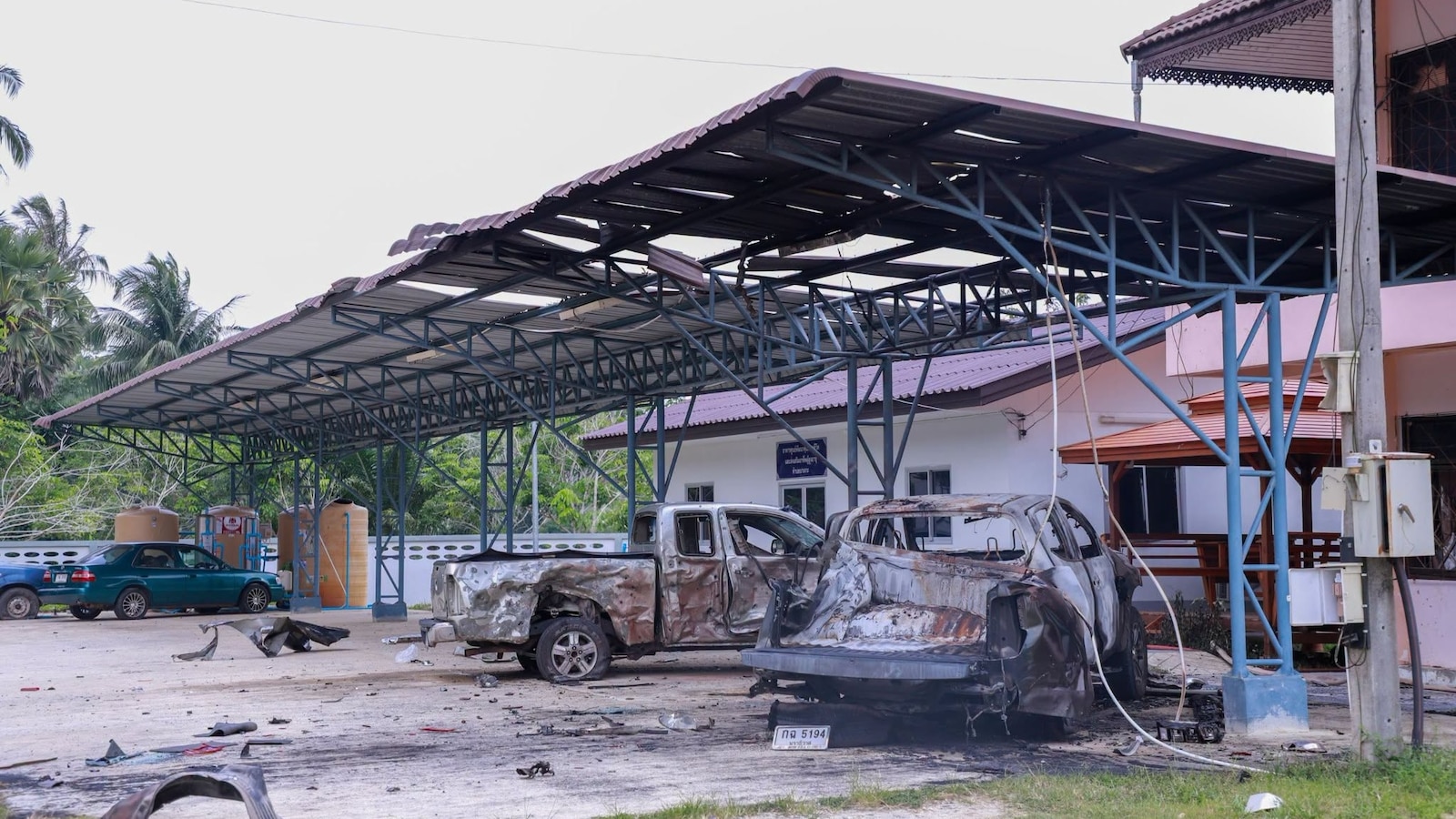
Lebanon’s state-run National News Agency has said at least 16 people have been killed in the Israeli airstrikes in southern Lebanon, which Israel’s military said were ongoing, while Hezbollah said there was intense fighting in the area.
The fighting poses a threat to the new US-Iran agreement on ending the war, which calls for an immediate halt of military operations “on all fronts, including in Lebanon”.
The deal also calls for ensuring the “territorial integrity and sovereignty” of Lebanon, where Israel has been battling the Iran-backed Hezbollah.
Israeli prime minister Benjamin Netanyahu has ruled out any immediate withdrawal from southern Lebanon, saying Israeli forces will stay there “for as long as necessary”.
As just mentioned, Donald Trump said on Thursday the US expected “a complete ceasefire on all fronts, including Lebanon, Hezbollah and Israel”, also encouraging “everyone in the Middle East region to maintain their commitment to allowing our negotiations to beautifully unfold”.
Inside the city of grief hit hardest by Israel strikes on southern Lebanon
As the procession wound its way through mounds of rubble, the crowd chanted and beat their chests, their lamentations echoed by the dull thud of shelling in the foothills just beyond the city.
“This is the tragedy of Karbala, O Imam Hussein, look. This is the tragedy of Karbala,” the crowd cried in the opening procession of Ashura, in the city of Nabatieh, southern Lebanon.
The religious ceremony of Ashura mourns the slaying of the holy figure Imam Hussein in the battle of Karbala in 680; today, it is a symbol for Shia Muslims of resistance against oppression. In normal times, the annual commemoration is the pride of Nabatieh, drawing crowds of up to 30,000 people who march through the streets and fill them with a collective cry of grief.
This year, the story of Karbala took on a renewed meaning for attenders because of the Hezbollah-Israel war, which killed more than 3,900 people in Lebanon, most of whom were Shia Muslims. Nabatieh was one of the hardest-hit by bombings during the war, and much of it was levelled.
“This year Ashura has a special meaning to us. We have lived the battle of Karbala every day during this war,” said Ismail Yaghi, a 50-year-old at the ceremony.
“There is sadness in our hearts and a pride at the same time for our martyrs. But we believe that just because someone died, it doesn’t mean that their life has ended. Their eternal life has just begun.”
Mohammad Bagher Ghalibaf, Iran’s chief negotiator, said future talks with the US must respect Tehran’s “red lines”. The ceasefire in Lebanon has been one of these red lines for Iran since the start of negotiations.
“As we have demonstrated throughout previous negotiations, we remain steadfast in respecting the established conditions and red lines, and in defending the interests of the Iranian nation,” Ghalibaf was quoted as saying by Iran’s official IRNA news agency.
“If the enemy becomes excessive [in its demands], we have proven that we are ready to retaliate and will not hesitate to deliver a stinging response,” he added.
The IDF said it has launched a strike in Lebanon’s eastern Bekaa valley against what it described as Hezbollah infrastructure and “in response to repeated violations of the ceasefire” by the Iran-backed group.
The statement came after the Israeli military said four of its soldiers were killed in southern Lebanon. The Times of Israel, citing the military, reported that an Israeli army tank came under a suspected Hezbollah anti-tank missile or drone attack overnight in the southern Lebanese village of Kfar Tebnit, killing an IDF tank battalion commander and three other soldiers.
Reacting to news of four IDF soldiers being killed in southern Lebanon, Israel’s far-right national security minister Itamar Ben-Gvir said “all of Lebanon must burn”.
In the latest in a series of incendiary statements, Ben-Gvir said he told the Israeli prime minister Benjamin Netanyahu that “for every tear of an Israeli mother, a thousand Lebanese mothers must weep”.
In a statement on social media, he said: “With all due respect to the Americans, Israel must make it clear to the entire world that the blood of our sons and the security of our citizens are not up for bargaining. All of Lebanon must burn.”
Ben-Gvir has a long history of inflammatory comments and actions, particularly against Arabs. He sparked diplomatic outrage last month after he shared footage of Israeli security forces abusing international activists.
When asked about the talks in Switzerland being postponed, Barrot advised not to read too much into it, telling FranceInfo: “The hardest part remains to be done, but let’s not overinterpret the postponement of meetings, given that this [US-Iran] agreement has been signed.
“What is essential now is that discussions, including at the technical level, can continue so that the first steps provided for by this agreement can be activated.”
US vice-president JD Vance has dropped plans to travel to Switzerland, where the talks were scheduled to take place in Burgenstock before the Swiss foreign ministry said they were postponed.
The French foreign minister, Jean-Noël Barrot, has urged Israel to respect the US-Iran agreement to end war in the Middle East, as the Israeli military continues to bomb southern Lebanon.
“This agreement provides for the cessation of hostilities. The Israeli government must respect it, and the United States must exert all necessary pressure on the Israeli government,” he told the French news channel FranceInfo.
The IDF said four of its soldiers were killed in southern Lebanon as fighting intensifies between the Israeli miltiary and Hezbollah.
One of the soldiers was identified as Lt Col Dor Gedalia Ben Simhon, with the IDF saying he was killed in action. The military said the three other soldiers will be identified later.
An early image on the newswires from southern Lebanon where the Israel Defense Forces (IDF) said it struck Hezbollah targets throughout the night and continues to strike this morning.
Lebanon’s state-run National News Agency has said at least 16 people have been killed in the Israeli airstrikes in southern Lebanon, which Israel’s military said were ongoing, while Hezbollah said there was intense fighting in the area.
The fighting poses a threat to the new US-Iran agreement on ending the war, which calls for an immediate halt of military operations “on all fronts, including in Lebanon”.
The deal also calls for ensuring the “territorial integrity and sovereignty” of Lebanon, where Israel has been battling the Iran-backed Hezbollah.
Israeli prime minister Benjamin Netanyahu has ruled out any immediate withdrawal from southern Lebanon, saying Israeli forces will stay there “for as long as necessary”.
As just mentioned, Donald Trump said on Thursday the US expected “a complete ceasefire on all fronts, including Lebanon, Hezbollah and Israel”, also encouraging “everyone in the Middle East region to maintain their commitment to allowing our negotiations to beautifully unfold”.
Welcome to our continuing live coverage of events in the Middle East.
Israel’s military says it is attacking Hezbollah in several areas across southern Lebanon and has been striking throughout Thursday night.
It said on Telegram that the strikes on “Hezbollah terrorists and infrastructure sites” came after “repeated violations of the ceasefire” by the Iran-backed grup.
It was earlier reported that three people had been killed in Israeli strikes in southern Lebanon, according to Lebanese state media. Hezbollah had said its fighters were engaged in fresh clashes with the Israeli military on Thursday.
The strikes have occurred despite the US-Iran agreement stipulating an end of the war on all fronts in the Middle East, including Lebanon.
Meanwhile, talks set to take place on Friday between the US and Iran on implementing the 14-point agreement to end their war have been cancelled, Switzerland’s foreign ministry has announced.
Vice-president JD Vance has postponed his trip to Switzerland, casting uncertainly over what happens next.
Iran’s Tasnim news agency said “nothing has been confirmed” about the Iranian delegation’s trip to Switzerland. A White House spokesperson said the US looked forward to starting “technical talks as soon as possible”.
In other key developments:
Vance lashed out at Israeli critics of the Iran deal, saying Donald Trump was Israel’s only ally left in the world, in a sharp rebuke that referenced the billions in defence aid the country receives from America. Trump “is the only head of state in the entire world who is sympathetic to the nation of Israel at this moment in time”, Vance told reporters.
Trump said on Thursday the US expected “a complete ceasefire on all fronts, including Lebanon, Hezbollah and Israel”, adding in a social media post: “We encourage everyone in the Middle East Region to maintain their commitment to allowing our negotiations to beautifully unfold.”
Iran’s supreme leader said he approved the deal with the US despite having a “different view”, without elaborating. Ayatollah Mojtaba Khamenei said in message read on state television: “In principle, I had a different view [about the memorandum of understanding], but I issued my permission due to the commitment that the honourable [Iranian] president, as the chairman of the Supreme National Security Council, gave me on behalf of himself and other members to protect the rights of the Iranian nation and the resistance front.”
In Khamenei’s message on Thursday – his first reaction to the Iran-US deal – he claimed Trump had “used all kinds of levers” to secure the deal “out of desperation”. The US president has claimed the agreement is a victory for Washington and averts a “worldwide depression”.
Iran announced plans to introduce a system of maritime fees in the strait of Hormuz after the 60-day period of negotiation triggered by the signing of the memorandum of understanding with the US. Tehran, claiming a historic victory over the US, said the strait was under its control and a European plan for a naval mission to escort ships though the vital waterway would not be welcome, reports Patrick Wintour.
Vance said the 60-day period in which to reach a final agreement with Iran started on Thursday. That would set a deadline for the final agreement between Iran and the US as 17 August.
US Central Command ended its blockade in the Hormuz strait, it announced on social media. The US naval blockade of the strait had been in effect since 13 April, with control of the waterway being a key point of conflict in the war. Marine Traffic data showed that at least seven ships had crossed the strait on Thursday.
The US would restart military action and reimpose a blockade against Iran if it did not fulfil its commitments under the signed agreement, US defence secretary Pete Hegseth said at a meeting with Nato defence ministers in Brussels.
Khamenei said in his message that he received assurances from the Iranian president, Masoud Pezeshkian, about the deal and that it would not be accepted “if the American side wants to make excessive demands”. “It is obvious that the face-to-face negotiations that will be held in the future will not mean accepting the enemy’s point of view,” he added.
EU foreign policy chief Kaja Kallas said she was representing the bloc’s position on the Middle East, after Israel announced it was severing diplomatic relations over allegations she had compared the country to apartheid South Africa.
Source: Guardian - World News