The Hindu’s flagship youth engagement platform, ‘The Hindu Huddle on Campus’, was successfully held at Amity University in the city on Wednesday, with an engaging debate on ‘Do platforms like Instagram and TikTok harm students’ mental health more than they help?’.
The event saw participation from Business Administration, Management, and BTech students, Aaditi Singh, Stuti Ranjan, Shafin Shabeer, and Anishka Chandra.
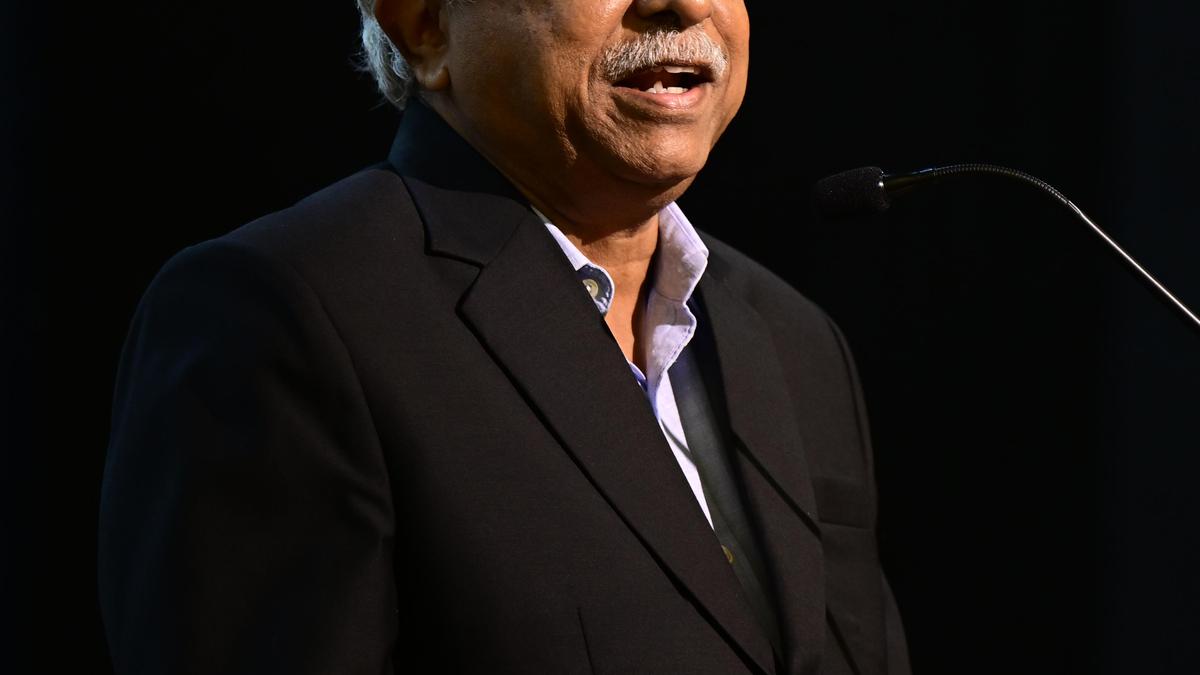
In his opening remarks, D. Subhakar, Vice-Chancellor, Amity University, said, “From our history, we know that any technology will always have a positive and a negative impact. So, we have to take a balanced approach and take good things from them.”
“All social media tools are helping us connect with the world, and our network is increasing. But there are a few negative things also. I have observed that students keep checking their mobiles. It stimulates the brain or overstimulates the natural cycle, and sometimes it may lead to mental health issues. Depression is also one of the forms, and the sleep cycle is getting affected,” he added.
Moderator Vishu Dev C.H., a faculty member from Amity School for Communication Enhancement and Transformation, pointed to concerns around anxiety, depression, distractions, and mental health and well-being.
Aaditi Singh pointed out that social media promotes a culture of comparison, where students are constantly given validation based on looks and body types, and are exposed to curated lifestyles. Stuti Ranjan pointed to the anonymity provided by social media. “People aren’t actually held accountable for their actions,” she argued.
As a counter to this, Anishka Chandra stated that social media does not harm, but could actually improve people’s mental health by creating networks. Shafin Shabeer argued that blaming social media is like blaming books for the bad eyesight or cars for the car accidents. “It basically needs structured usage and the supervision of students who use social media,” he added.
In his closing remarks, B.S. Satish Kumar, Deputy Chief of Bureau, The Hindu, said, “Social media is a double-edged sword. So, with proper supervision and digital literacy, harmful effects can be avoided.”
P.S. Sali, vice-president, and Monit Kapoor, Pro-Vice Chancellor of the University and hundreds of students participated in the event.
Published - June 03, 2026 11:43 pm IST
Source: The Hindu - India News