Nawaf Salam says Israel collectively punishing southern Lebanon and forcing people ‘into exile’ but defends security talks with Tel Aviv
Lebanon’s prime minister accused Israel on Saturday of pursuing a “scorched-earth policy” in his country’s south, urging a halt to the fighting as Israel carried out fresh airstrikes and issued evacuation warnings for more than a dozen locations.
A day after the Israeli prime minister, Benjamin Netanyahu, said his forces had advanced deeper into Lebanon, his counterpart Nawaf Salam warned the country was facing a “dangerous” escalation, and called for “a swift and real ceasefire”.
In a televised address, Salam accused Israel of “pursuing a scorched-earth policy and collective punishment” by “destroying towns and villages, and forcing their inhabitants into exile”.
This will bring “neither security nor stability” to Israel, he said.
Israel’s military said on Sunday its forces were advancing in Lebanon as part of expanded ground operations to strengthen its military position in the south of the country where it is fighting with Iran-backed Hezbollah.
“A significant number of IDF ground soldiers commenced offensive operations aimed at expanding the Forward Defense Line ... the operation is currently expanding to additional areas,” the Israeli military statement said, adding its forces had crossed the Litani river.
Meanwhile, Reuters reported the Israeli military saying one of its soldiers had been killed in combat in Southern Lebanon. There were also reports that the IDF had captured a strategic castle in the south, possibly its deepest incursion into Lebanon in 26 years.
Salam on Saturday defended his government’s engagement with its southern neighbour, after military delegations from both countries held security talks in Washington on Friday, with more US-brokered negotiations planned next week.
Salam said the outcome of the negotiations was “not guaranteed”, but called them “the least costly path for our country and our people”.
A truce to halt the fighting between Israel and Tehran-backed Hezbollah officially took effect on 17 April, but has never been observed.
Both Israel and Hezbollah accuse each other of violating the ceasefire and justify their attacks by the other’s alleged breaches.
A US statement issued after Friday’s Israel-Lebanon talks made no mention of the truce, but said the “productive military-to-military discussions” would inform next week’s political meeting.
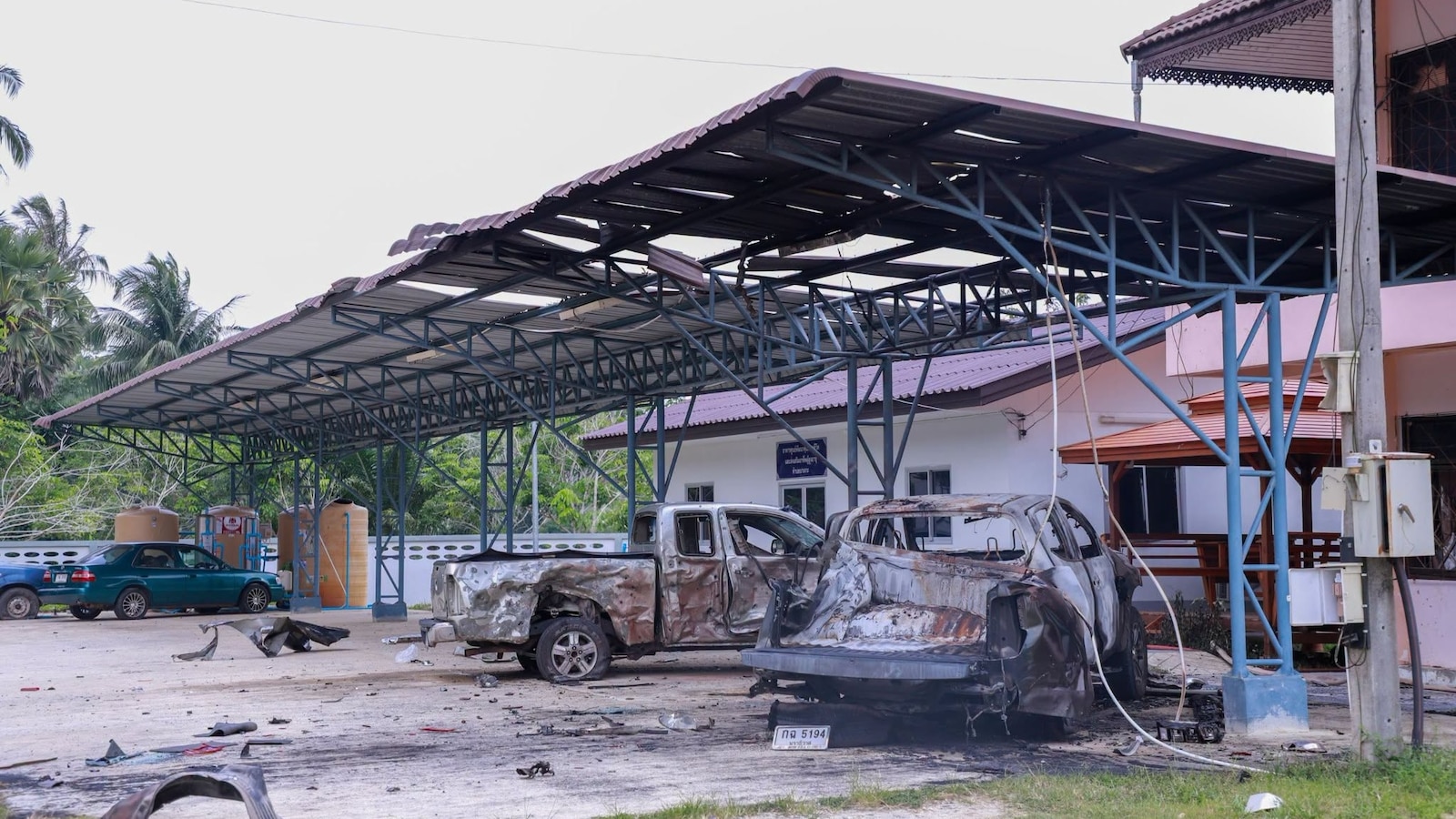
Lebanon’s state-run National news agency (NNA) reported several Israeli attacks in the south on Saturday, and the Lebanese military said two of its soldiers “were seriously wounded … by a hostile Israeli drone” near the southern city of Nabatieh.
The Israeli military issued fresh evacuation warnings covering villages near Nabatieh and others in the east of the country.
Hezbollah said it launched multiple attacks targeting northern Israel on Saturday, and had also clashed with Israeli soldiers in southern Lebanon.
In a statement, the group said it was confronting Israeli forces around the outskirts of the towns of Zawtar al-Sharqiyah, Yohmor al-Shaqif and Dibbine, adding that the troops “had not yet succeeded in taking control of the towns”.
The Israeli military told AFP that more than 25 projectiles were launched from Lebanon towards Israel on Saturday, while air alert sirens sounded in the northern cities of Karmiel and Safed for the first time since the ceasefire, according to the army’s Home Front Command.
Public broadcaster Kan aired footage shared on social media showing rockets falling into the sea off Israel’s Nahariya, near the border, sending beachgoers fleeing.
Netanyahu announced on Friday that Israeli forces had advanced beyond the Litani River, which runs about 30km (20 miles) north of the Lebanon-Israel frontier, and were “hitting Hezbollah head on”.
The Lebanese health ministry says that Israeli attacks have killed more than 3,371 people since 2 March, when Hezbollah drew Lebanon into the Middle East war in support of its backer Iran.
Hezbollah said it attacked Israel in retaliation for the death of Iran’s supreme leader in US-Israeli strikes when the war erupted on 28 February.
Iran has insisted that any agreement to end the wider Middle East war must also cover Lebanon.
With Agence France-Presse and Reuters
Source: Guardian - World News