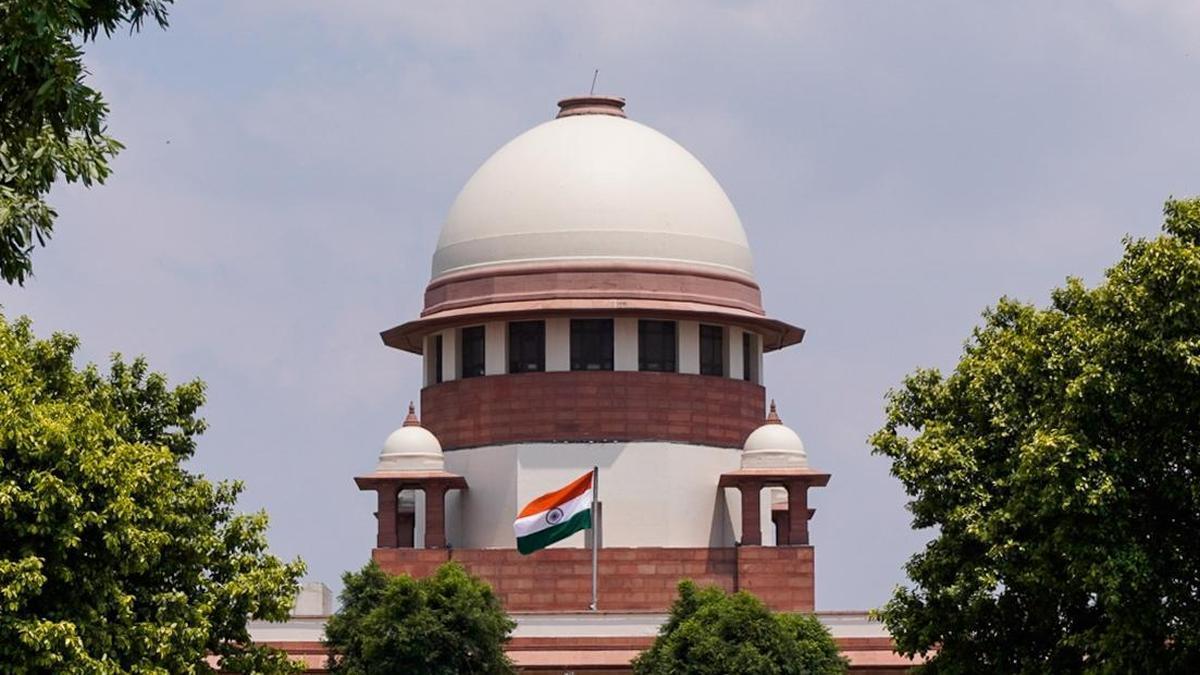
The Supreme Court’s May 21 revival of Section 124A (sedition) proceedings against consenting accused persons exposes them to an admittedly oppressive provision both the court and the Union government agreed was “not in tune with the current social milieu, and was intended for a time when this country was under the colonial regime”.
A three-judge Bench of the Supreme Court had frozen all proceedings under Section 124A of the now-repealed Indian Penal Code on May 11, 2022, virtually casting a shadow of doubt over every sedition case at the time.
The Bench, of which Justice Surya Kant (as he was then) was a member, had recorded the rampant misuse of the provision, which dates back to 1898 and pre-dates the Constitution.
The interim order of May 11 had taken excerpts from a Union government affidavit, filed just two days earlier, quoting Prime Minister Narendra Modi’s firm belief during ‘Azadi Ka Amrit Mahotsav’ that “we need to, as a nation, work even harder to shed colonial baggage that has passed its utility, which includes outdated colonial laws and practices”.
The court had concurred with the Union government that colonial laws such as Section 124A, punishable with life imprisonment and having a “chilling effect” on free speech, caused “mindless hindrances to people” and “reeked of a colonial mindset that has no place in today’s India”.
The Supreme Court’s position on Section 124A in May 2022 was in consonance with its judgment in I.R. Coelho versus State of Tamil Nadu that law must be in step with the “march of time”.
However, the court’s May 21, 2026 clarification has unlatched Section 124A, ostensibly to protect the right to a speedy trial for accused persons seeking closure. The order, passed last week, recorded that there would be no “impediment for the courts to decide such matters [under Section 124A] on merits and in accordance with law”.
However, the challenge to the very constitutionality of Section 124A remains alive and pending in the Supreme Court. Multiple writ petitions, titled S.G. Vombatkere versus Union of India, have challenged Section 124A for violating the foundational rights to free speech and expression, personal liberty, life, and equality before the law.
The pendency of the Vombatkere petitions raises the question of whether lower courts should pronounce judgments on guilt when the constitutionality of the provision itself is under challenge in the Supreme Court.
Besides, the May 21 clarification was passed in an unconnected case, Kamran versus State of Madhya Pradesh, without hearing the petitioners in the Vombatkere group of matters.
While the top court’s clarification may bring relief to some accused persons, it also creates practical problems on the ground. For one, the May 21 clarification did not explicitly deal with a situation in which one accused agrees to be subjected to proceedings under Section 124A while co-accused persons may refuse to do so.
Published - May 24, 2026 07:40 pm IST
court / justice and rights / judiciary (system of justice) / judge
Source: The Hindu - India News