Isaacman’s $25 million donation leads to impressive new facilities.
When he was 12 years old, NASA Administrator Jared Isaacman attended the weeklong “Aviation Challenge” program at Space Camp in Huntsville, Alabama.
“For the first time, I got behind the controls of an airplane when I attended Aviation Challenge,” Isaacman said on Friday evening during an event at the US Space & Rocket Center. “I became a pilot because I thought that was the closest I would ever get to the stars.”
Decades later, after founding a successful online payments company and flying to space twice as a private citizen aboard SpaceX’s Crew Dragon, Isaacman has returned to Space Camp in Alabama on multiple occasions to meet with participants and share a bit of the awe he experienced as a kid. In 2022, a year after the first of these flights, Inspiration4, Isaacman donated $10 million to kick off a Space Camp expansion.
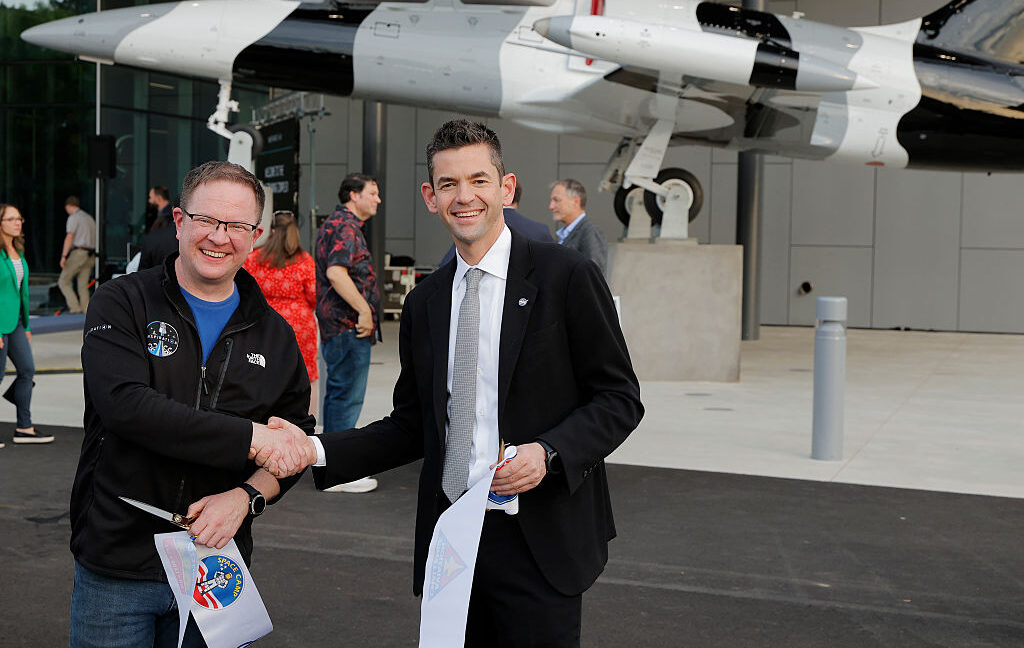
Now, as the leader of NASA’s space program, he has sought to continue to pay it forward. He donates his salary to Space Camp, and on Friday, he returned to open the new “Inspiration4 Skills Training Complex,” a 50,000-square-foot facility completed with an additional $15 million donation from Isaacman. The money will also support development of a new dormitory.
Space Camp has carved out an influential place in American culture. A 1986 feature film, Space Camp, popularized the camp when four teenagers befriended a robot and ended up launching into orbit on a space shuttle. The plot is implausible, to say the least, and the movie was criticized because it came out just a few months after the space shuttle Challenger catastrophe.
Nevertheless, the movie helped build the myth of Space Camp, which had only opened four years earlier. Since then, more than 900,000 children ages 9 to 18 years old have “graduated” from the experience. Included among them are at least half a dozen NASA astronauts, including Dottie Metcalf-Lindenburger, Kate Rubins, Serena Auñón-Chancellor, and a mission specialist on the recently flown Artemis II mission, Christina Koch.
Some of the exhibits and activities at Space Camp had grown a bit dated, but Isaacman’s gift should help to revitalize the programs.
Among the new elements are a parachute “simulation room” that features a virtual-reality 10,000-ft drop with wind simulation, a drone lab, an interactive mission control, and “training simulators” that will recreate the experience of zero gravity.
The Artemis mission, flown by Koch and three other astronauts, appears to have reignited interest in the space program. Space Camp officials say registrations have doubled this summer since the successful completion of the lunar flyby mission in April.
Interest is expected to grow further in the coming years as NASA returns to the Moon and establishes habitats there. The aim is to meet the needs of space-curious children with a modernized experience.
“Off the success of Artemis II, America’s return to the Moon is just getting going,” Isaacman said during the ribbon-cutting event for the new facility.
“And it is that kind of magic that inspires the next generation to attend Space Camp, get hands-on experiences at this national treasure, unlike anywhere else in the country, and grow up ready to pick up the baton and join in this great adventure.”
Source: Ars Technica