IT complexity is not a new problem. But AI is making it harder to ignore, and easier to fix, if you start in the right place.
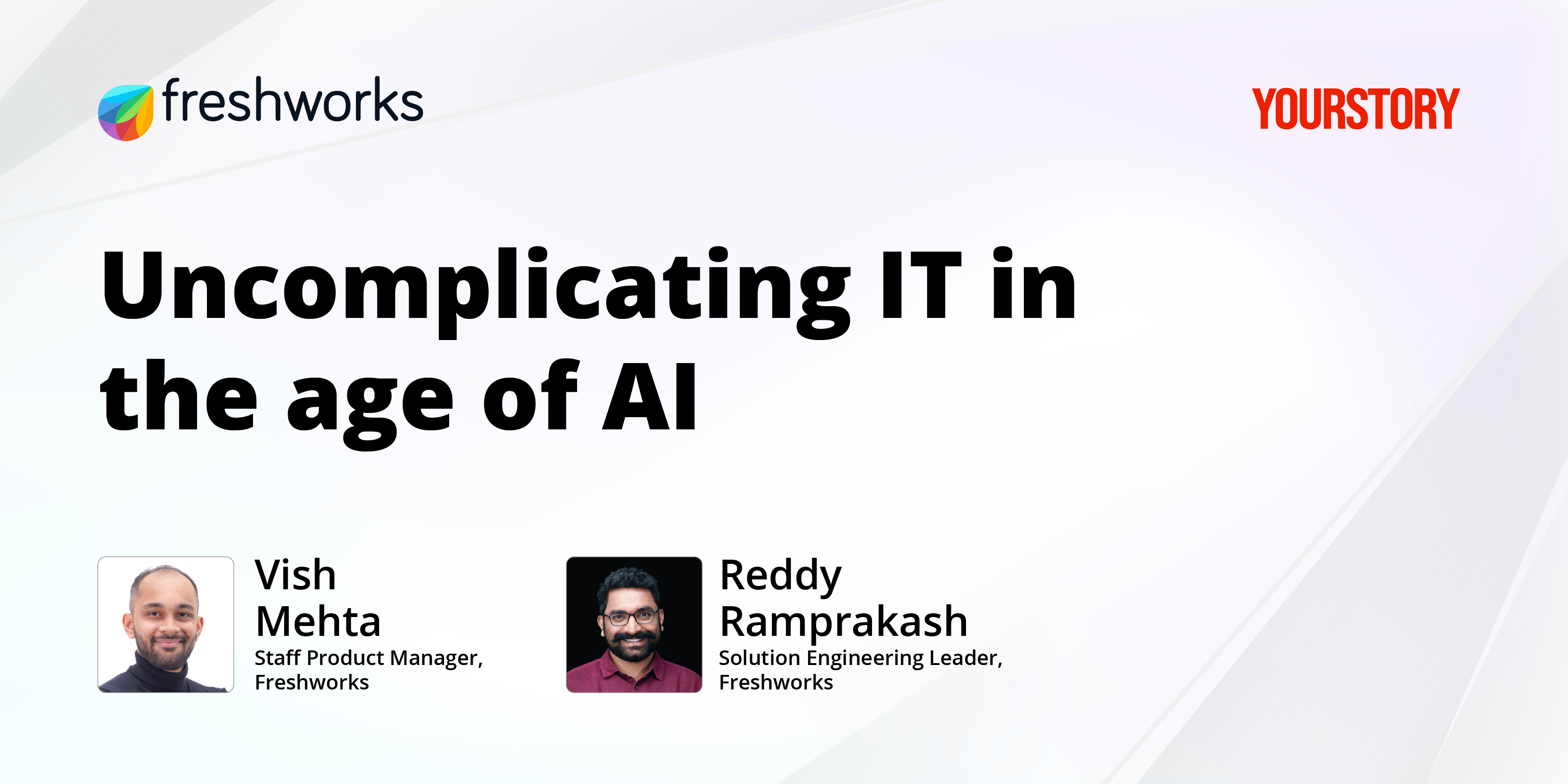
In a webinar hosted by YourStory in partnership with Freshworks, Vish Mehta, Staff Product Manager, and Reddy Ramprakash, Solution Engineering Leader, shared practical strategies for modernizing IT service management. They focused on how growing organizations can enhance their processes without increasing chaos.
Your organization is ready to modernize—just not yet aware.
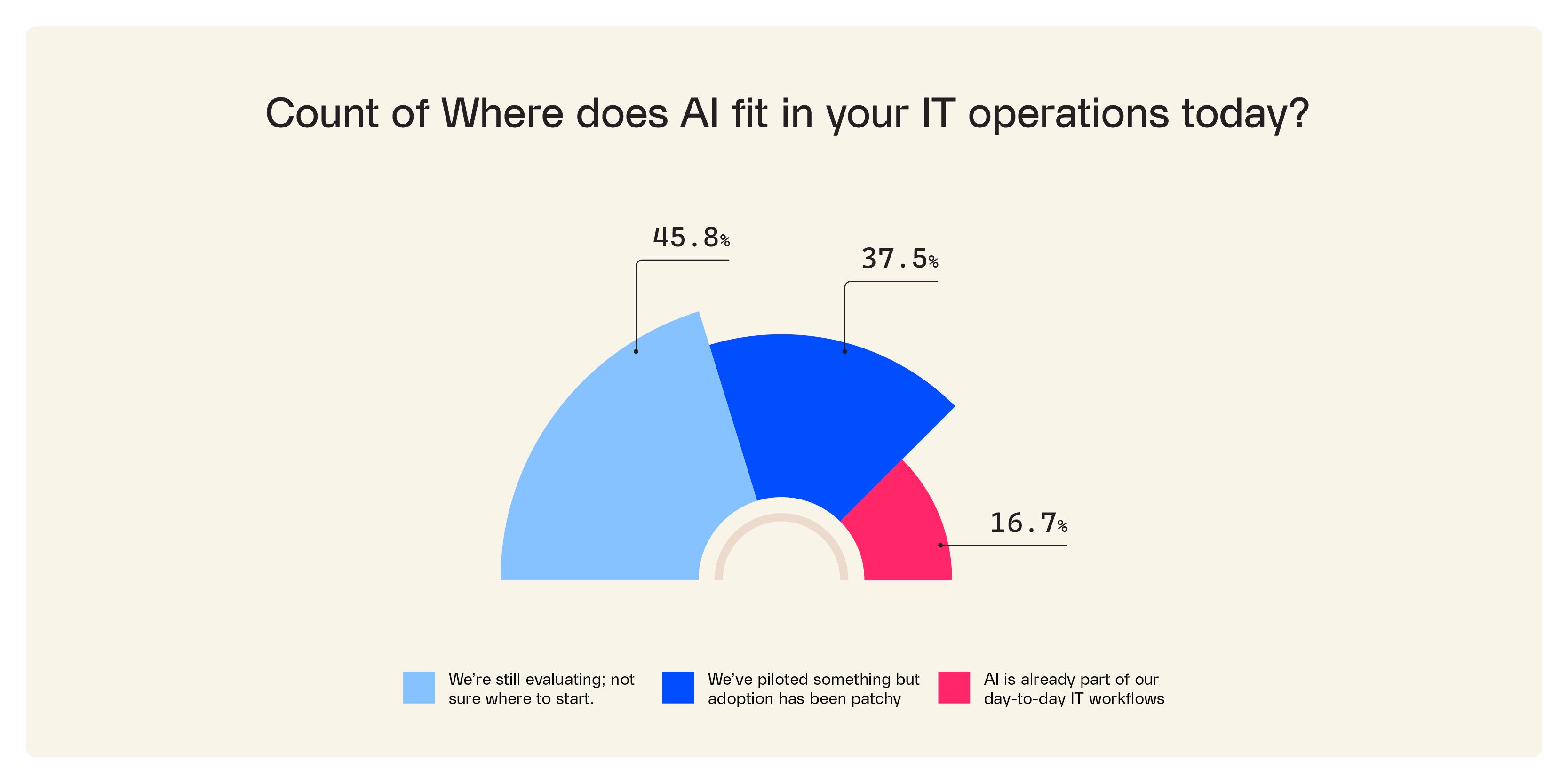
The opening poll set the tone for the session. Most attendees had already tried something with AI in their IT workflows, but meaningful adoption was still out of reach.
Reddy opened with a reframe that landed early: readiness isn't about budget, tools, or timing. It shows up as friction. He outlined three signals that tell him an organization has crossed the threshold:
- Decisions are slowing down. The same data set produces different answers depending on which system you check.
- Frontline teams are doing "glue work." People are manually reconstructing context between systems that should be talking to each other.
- Growth is breaking the experience. A model that worked with 50 people simply can't hold at 500.
"If your best people are spending time stitching systems together, that's a modernization signal," Reddy said.
For organizations still on the fence, his advice was direct: you don't have to rip and replace everything. Identify where friction is highest, consolidate where it makes sense, and apply automation to remove repetitive work. Modernization can start with simplification.
AI is not the complexity. The wrong AI rollout is
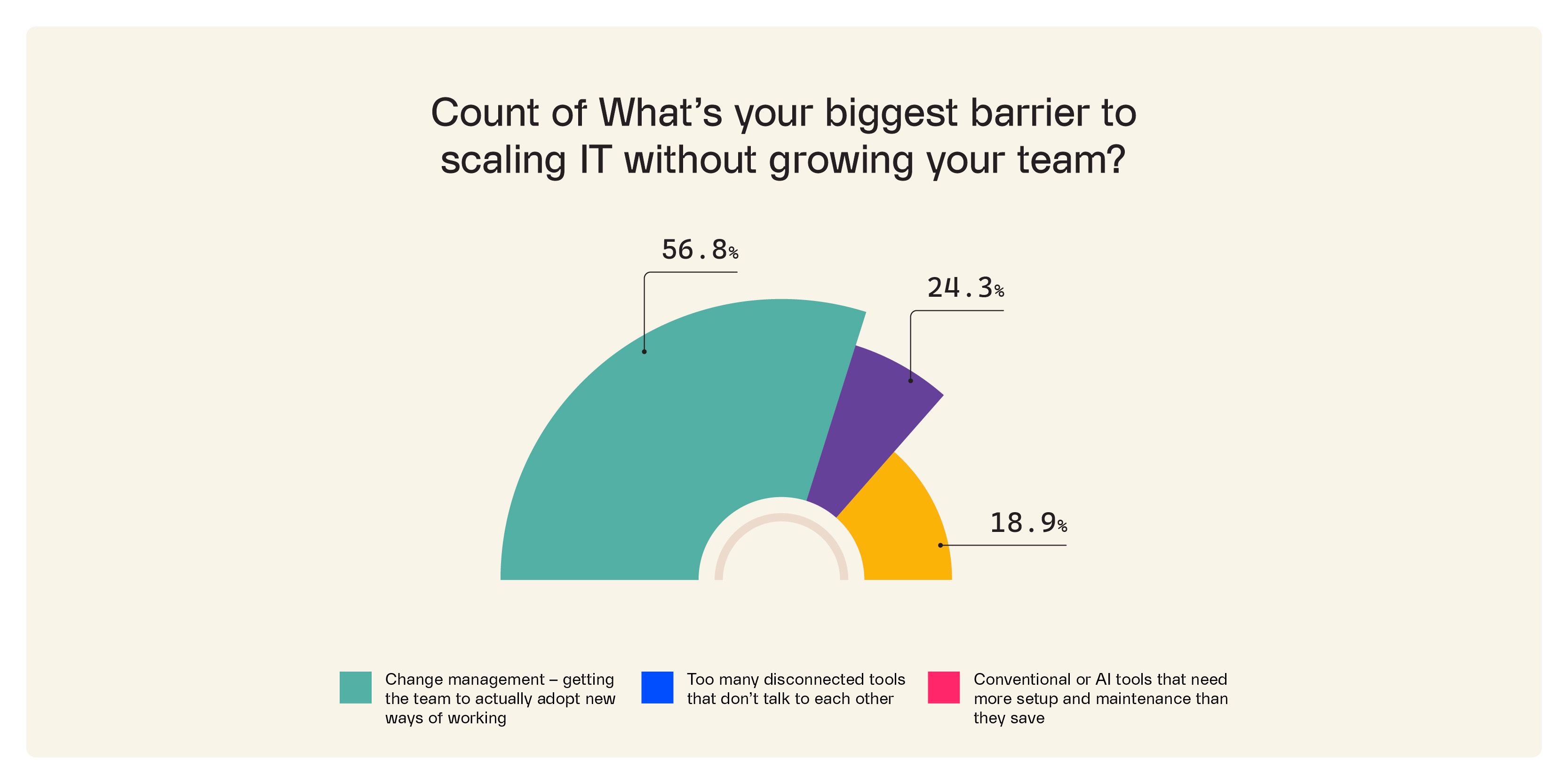
A live poll during the session revealed that 56.8% of attendees named change management as their biggest barrier to scaling IT without growing their team. Not disconnected tools. Not setup costs. People.
Vish's response was blunt: the harder problem in any ITSM modernization is never the technology.
His prescription for driving real adoption rested on three principles:
- AI has to feel assistive, not disruptive. If an employee prefers to work through email, forcing them onto a new channel creates a barrier at the exact moment you need them to trust the system. Let AI serve them where they already are.
- Start with use cases where the impact is immediate and obvious. In most organizations, 60-70% of tickets are variations of the same request. Automating high-volume, repetitive work delivers visible ROI fast and builds the trust that makes broader adoption possible. Automating a complex edge case first is a mistake.
- Transparency matters more than people expect. "They don't need a black box. They need something they can work with," Vish said. If an employee cannot understand why AI gave a particular answer, they will not act on it.
Finally, leaders have to address the human anxiety directly. No technology rollout will substitute for a conversation about what AI actually means for people's roles.
Stop reporting activity. Start reporting impact
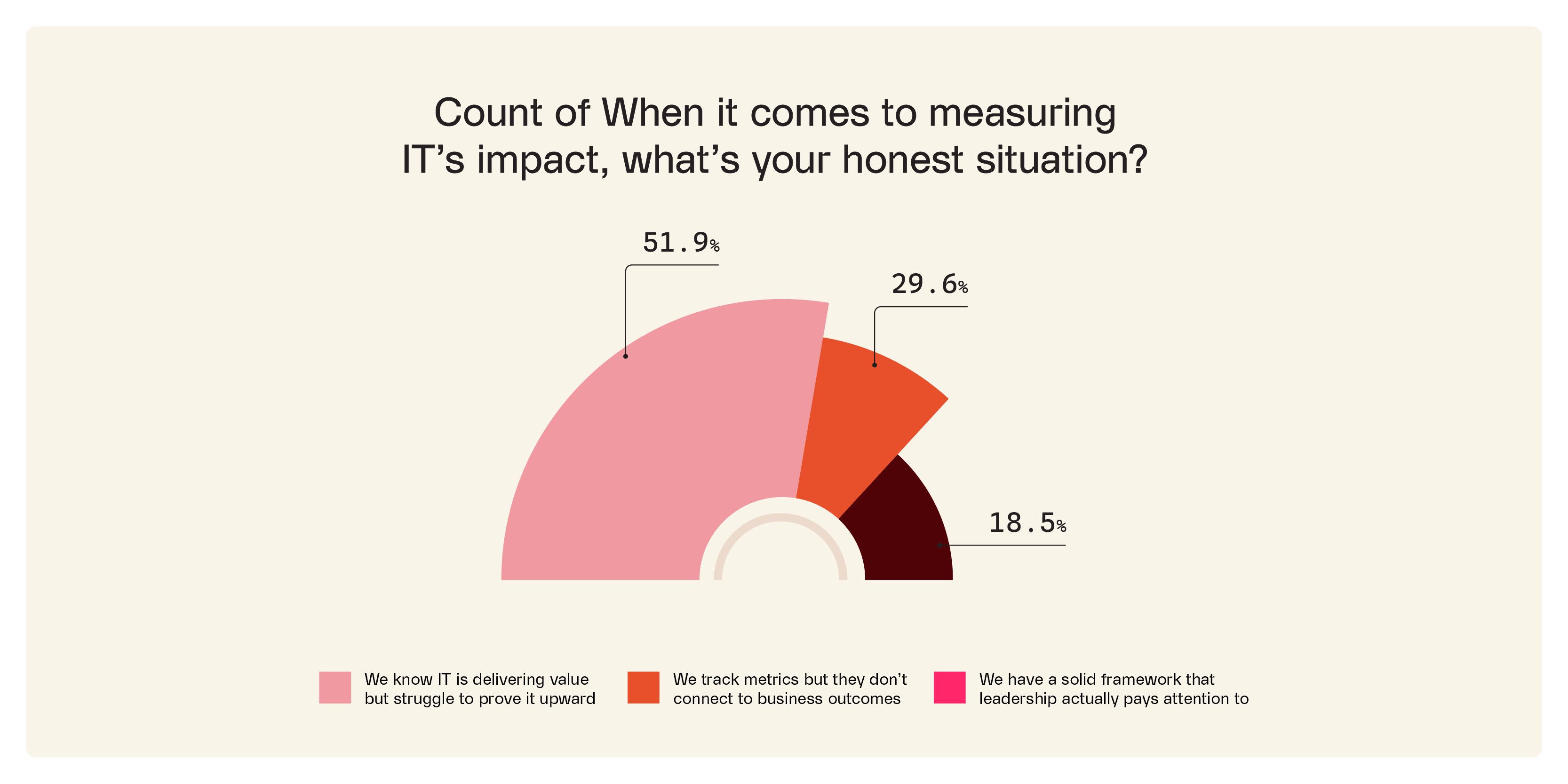
The session's final poll was revealing: 51.9% of attendees said they know IT is delivering value but struggle to prove it upward. Another 29.6% said they track metrics that don't connect to business outcomes.
Vish's answer was to shift from service-level agreements (SLA) to experience-level agreements (XLA). A CEO does not care that 99.9% of tickets met SLA. They care about what it took for an employee to get there.
Freshworks' own Global Cost of Complexity report found that tool switching costs organizations roughly 6.7 to 6.8 hours per employee per week. That is the kind of number that translates upward. So does the time saved when AI deflects high-volume tickets, or when a unified platform cuts the number of tools an employee has to navigate. "Move away from reporting activity and start reporting on actual impact," Vish said. Time saved, productivity unlocked, processes accelerated across teams.
On the question of consolidation before AI adoption, both speakers were aligned: don't use AI to manage the chaos between disparate systems. Use it as an opportunity to eliminate the chaos. An AI layer sitting on top of fragmented data is still fragmented data.
Source: YourStory - Startups