HomeTechnologyYou want your Moon landings in HD? So does NASA—here's how it's happening.

You want your Moon landings in HD? So does NASA—here's how it's happening.

TechnologyApril 22, 2026
1 min read
You want your Moon landings in HD? So does NASA—here's how it's happening.
"You just push this button, and in three hours, you're counting photons."

During most of the Artemis II mission, the crew of four astronauts beamed back low-definition video, both from inside the spacecraft and from exterior views of the Moon. It was exhilarating stuff, but in a world in which we're all watching HDTVs, it also felt a little flat.

This is because Orion largely communicated with Earth via radio waves, picked up by large dishes sprinkled around the world. This is pretty much the same way the Apollo spacecraft talked to Earth more than half a century ago.

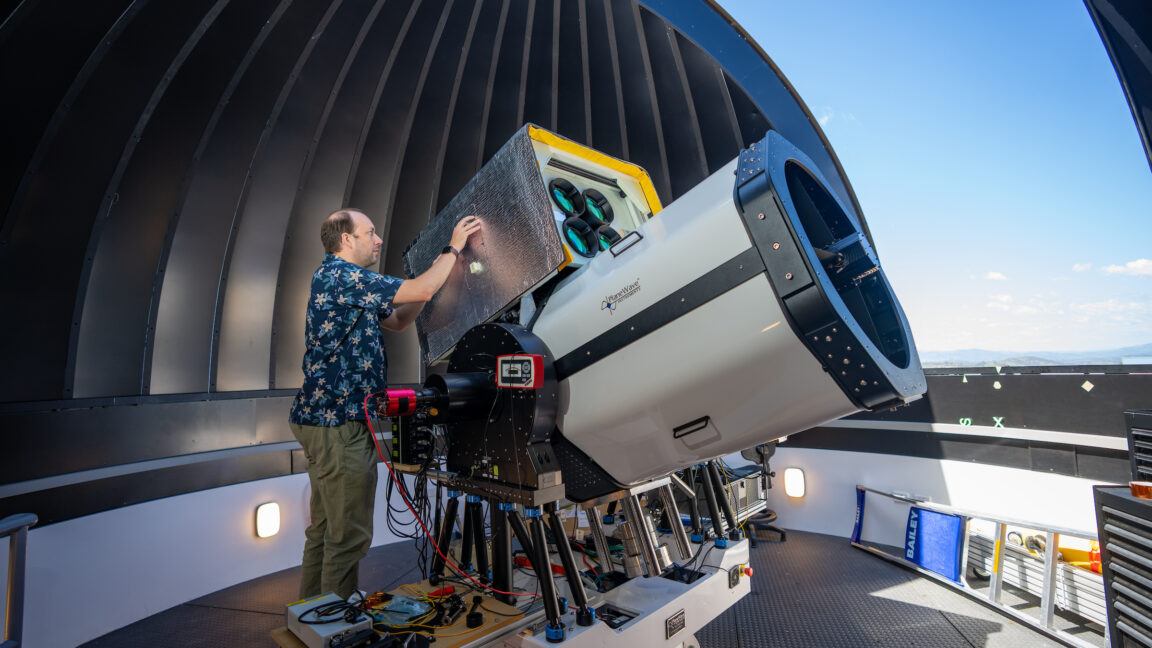
However, unlike Apollo, the astronauts on Orion would periodically send batches of much higher-resolution data, including the stunning photographs of the far side of the Moon and the Solar eclipse observed from there. This was made possible by optical laser communications, and not just those built by NASA. The mission included a commercial component that could pave the way for vastly more data returning to Earth from space than ever before.

Read full article

Comments

Source: Ars Technica

Share this article

Related Articles

iOS 27 might add a lot more customization to the Camera app
2026May 13

iOS 27 might add a lot more customization to the Camera app

Apple's next iOS update could include something phone photographers have been waiting for: a lot more control over the Camera app. According to Bloomberg's Mark Gurman, the Camera app will be "fully c

Article1 min read
Read More
Amazon’s Panos Panay addresses new Fire phone rumors
2026May 13

Amazon’s Panos Panay addresses new Fire phone rumors

Amazon's head of devices and services, Panos Panay, says that the company is "not necessarily" planning to release a smartphone, but has stopped short of denying it outright. It was previously reporte

Article1 min read
Read More