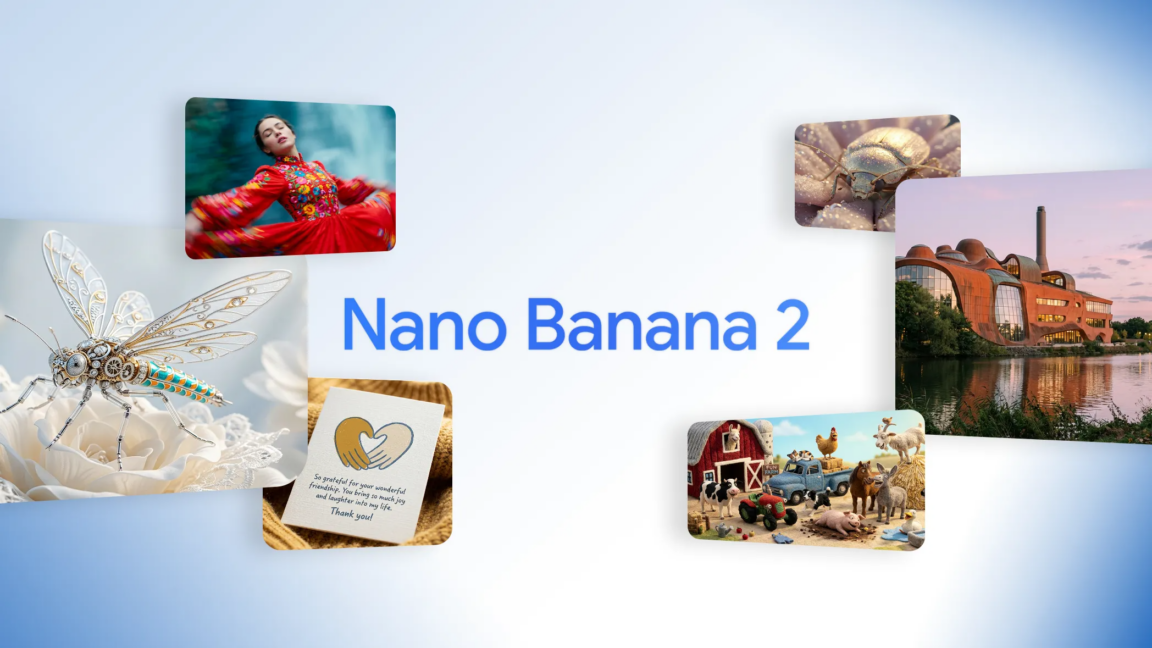
The last year has been big for Google's AI efforts. Its rapid-fire model releases have brought it to parity with the likes of OpenAI and Anthropic and, in some cases, pushed it into the lead. The Nano Banana image generator was emblematic of that trend when it debuted last year, and subsequent updates only made it better. Now, Google has announced yet another update to its image model with Nano Banana 2, which is available starting today.
Nano Banana 2 is more accurately known as Gemini 3.1 Flash Image—the previous Nano Banana models were based on the 3.0 branch. According to Google, the new release can deliver results similar to Nano Banana Pro but with the speed of the non-pro Flash variant.
Google promises the new image generator will have more advanced world knowledge pulled from the Internet by the Gemini 3.1 LLM. This apparently gives it the necessary information to render objects with greater fidelity and create more accurate infographics. The days of squiggly AI text were already ending, but Google says Nano Banana 2 has Pro-like text accuracy in image outputs.
Read full article
Comments
Source: Ars Technica