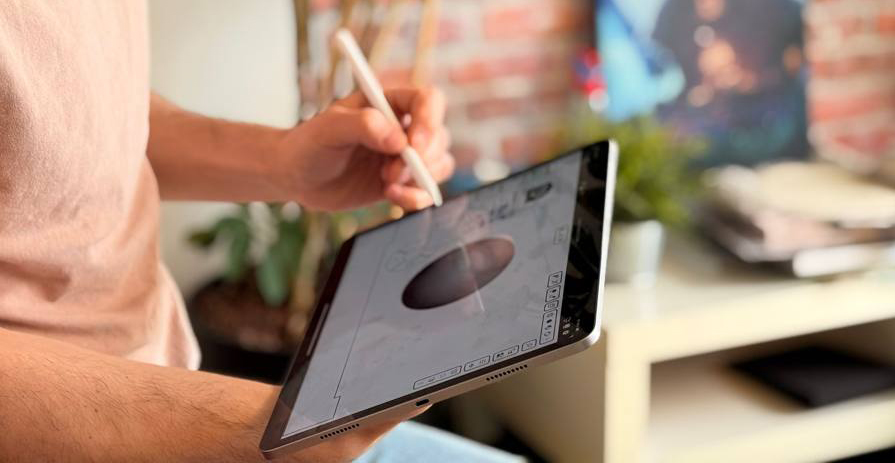
Popular open source 3D modeling tool Blender's social media channels and subreddit have regularly seen people asking for a tablet version for years now. And according to a blog post by Dalai Felinto from the Blender team, the developers of the application have now committed to build just that.
"The idea is to bring the full power of Blender to these devices," the blog post explains. "This requires adapting to platform-specific paradigms, but also to offer more task-oriented user interfaces with reduced information density. This will be achieved by extending existing input methods and improving workspaces and application templates, running on top of a regular Blender build."
The long-term goal is to build out not just a standalone tablet interface, but to offer the same advantages something like an iPad Pro offers to PC-connected graphics tablet peripherals, too—and it goes both ways. Ultimately, a standalone tablet + a keyboard and trackpad should offer the same experience as on desktop, and a desktop PC with a graphics tablet should be the same as a standalone tablet in terms of experience.
Read full article
Comments
Source: Ars Technica